3 Card Tarot Reading: A Simple Guide to Past, Present, Future Spreads
September 18, 2026 | By Orion Drake
A 3 card tarot reading is one of the easiest ways to turn a loose question into a clear reflection. Instead of pulling one card and wondering how much meaning to give it, you draw three cards and read them as a small story: where the energy begins, what is happening now, and what kind of direction may be useful next. You can use physical cards, but a quick online tarot pull can be just as helpful when you want a simple, low-pressure moment of guidance. The goal is not to force a prediction. It is to slow down, notice patterns, and ask better questions about the situation in front of you.
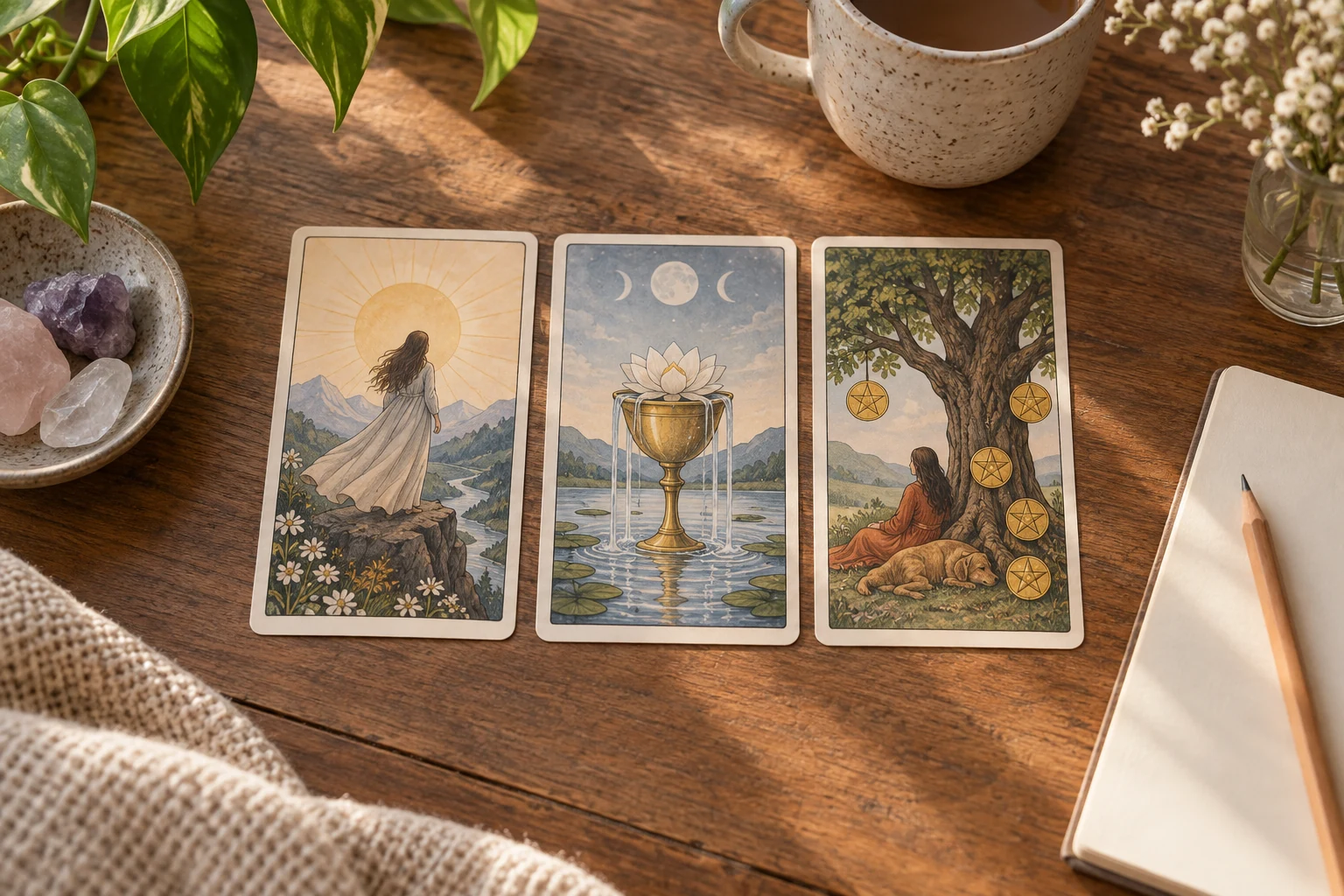
What Is a 3 Card Tarot Reading?
A 3 card tarot reading is a compact spread that uses three card positions to answer one focused question. The most familiar version is past, present, future. Card one looks at the background or influence behind the matter. Card two reflects the current situation. Card three suggests a possible direction, next theme, or outcome to consider.
That layout is popular because it gives you more context than a single card without becoming overwhelming. Three cards are enough to create movement. You can compare them, notice whether they feel similar or tense, and see whether the final card continues the first two cards or shifts the story.
This is why a three card tarot reading works well for beginners. You do not need to memorize every card meaning before you begin. You need a clear question, three defined positions, and enough patience to read the cards together instead of treating them as three separate fortune-cookie messages.
Why Three Cards Work So Well for Self-Reflection
Three cards create a beginning, middle, and next step. That makes the spread useful for journaling, decision support, relationship reflection, creative blocks, career questions, and daily check-ins. It is also flexible. You can use the same number of cards for different layouts, such as situation, action, outcome or mind, body, spirit.
The power of the spread comes from relationship. A single card can feel open-ended. A ten-card layout can feel like too much information at once. Three cards give you enough contrast to ask, "What changed between card one and card two?" or "Does card three feel like advice, warning, encouragement, or a question?"
For an online reading, the same principle applies. The digital draw gives you the cards; your reflection gives them context. Random Tarot Card is especially suited to this lighter use because the site is built around simple card pulls, basic spread choices, and easy explanations rather than high-pressure claims.
How to Do a 3 Card Tarot Reading for Yourself
Start with one question. It should be open enough to invite reflection, but narrow enough that the cards have something to respond to. "What should I know about my work week?" is easier to read than "What will happen to my whole future?" For love, try "What pattern should I notice in this connection?" For career, try "What should I focus on before making my next move?"
Next, choose your layout before you draw. This matters because the meaning of each card position should not change after you see the cards. If you decide on past, present, future, keep that structure even if the third card surprises you. If you use situation, action, outcome, read card two as the action point instead of turning it into a general feeling.
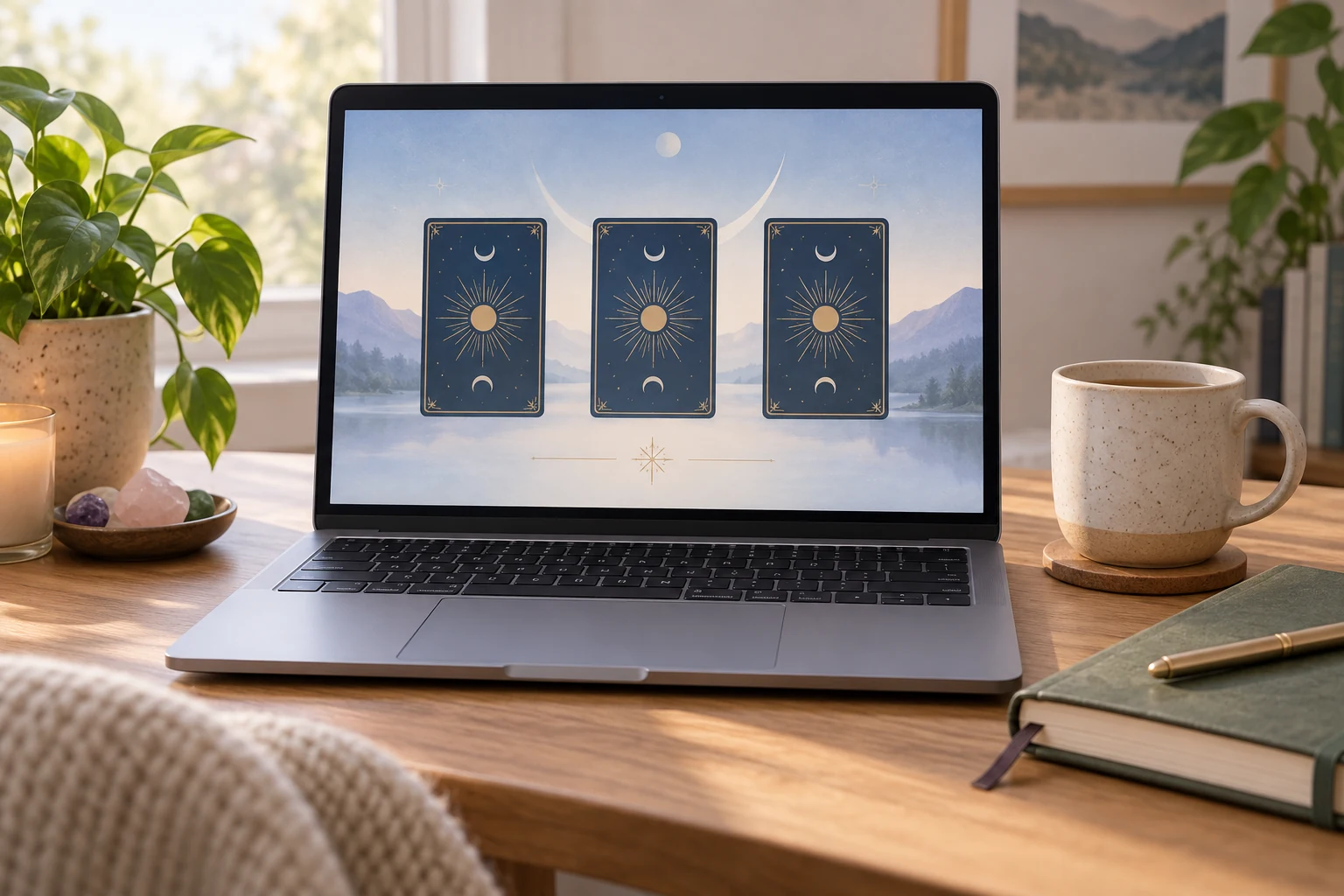
Then draw three cards and place them left to right. If you are using Random Tarot Card's simple spread tool, treat the screen the same way you would treat a physical table: pause before interpreting, look at the whole set, and notice your first reaction.
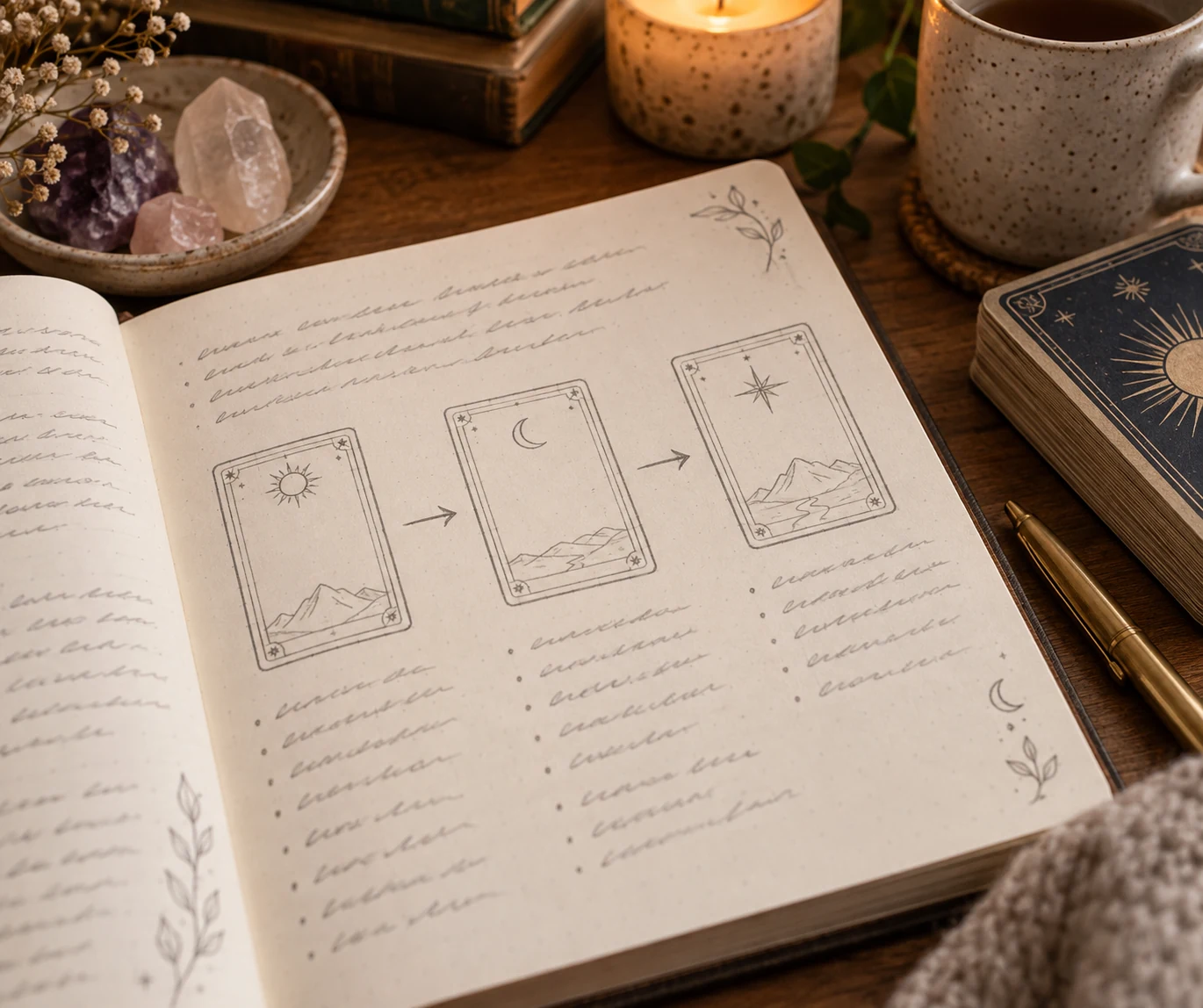
Write down the card names, positions, and your initial response. Look for repeated suits, major arcana cards, court cards, numbers, colors, symbols, or emotional tone. Only after that should you check the card meanings. The strongest readings usually combine card knowledge with your honest reaction to the spread.
Common Three Card Tarot Spreads to Try
The classic past, present, future spread is the best starting point. It helps when you want to understand the path of a situation: what shaped it, where it stands, and what direction may be emerging. Use it for general reflection, timing questions, or moments when you want a simple story line.
Situation, action, outcome is more practical. Card one names the core condition, card two suggests a useful response, and card three shows what may develop if that response is taken seriously. This spread is helpful when you feel stuck and want to move from interpretation into a small next step.
Mind, body, spirit is better for emotional check-ins. Card one can show your thoughts, card two your physical or practical reality, and card three the deeper meaning or inner need. Keep this reflective rather than medical. Tarot can help you notice feelings and patterns, but it is not a substitute for professional care when you need it.
You, the other person, the connection can be useful for love questions, friendship questions, or family tension. Read it gently. The cards should not be used to decide what another person "really" thinks with certainty. A safer approach is to ask what dynamic you can observe and how you can respond with more awareness.
Option A, option B, what to consider works for choices. The third card is not a command. It is a lens. It may highlight a risk, a hidden priority, or the value that should guide your decision.
How to Read the Three Cards as One Story
The most common beginner mistake is to read each card in isolation. In a 3 card tarot reading, the connection matters as much as the individual meanings. Start by naming the role of each position in plain English. For example: "The past influence is the Eight of Cups. The present card is Strength. The future card is the Page of Pentacles."
Next, turn the spread into a sentence. It might sound like this: "I have been moving away from something that no longer fits, I am being asked to stay patient and steady now, and the next useful step may be small, practical learning." This sentence is not the final truth. It is a draft interpretation you can test against your real situation.
Look for changes in energy. Does the spread move from swords into cups, suggesting a shift from analysis to feeling? Does it move from major arcana into pentacles, suggesting that a big inner theme needs a practical routine? Does the same suit appear twice, showing a strong theme?
Also notice tension. A bright first card and a heavy second card may show that the current moment feels more complicated than the beginning did. A difficult first card and a hopeful third card may suggest recovery, reframing, or a next step that restores confidence. Tarot is most useful when it helps you ask, "What part of this feels true, and what can I do with that awareness?"
Free 3 Card Tarot Reading Online: What to Expect
People search for free 3 card tarot reading online because they want a quick way to draw cards without setting up a physical deck. Some searches mention love, career, Lotus, Salem, or past, present, future. The useful question is not which label sounds most dramatic. It is whether the reading gives you a clear structure and leaves room for your own reflection.
A good online reading should be easy to begin, easy to understand, and honest about its limits. It should not pressure you into treating the cards as certainty. It should help you pause, compare the three positions, and consider what the spread brings to mind.
If you are reading about love, keep the question centered on your own awareness and choices. If you are reading about career, use the cards to explore priorities, fears, and next actions rather than to replace practical planning. If you are reading about the future, treat the third card as a possible direction or theme, not as a fixed event.

Questions That Make a 3 Card Spread Clearer
The question you ask shapes the reading. A vague question usually creates a vague interpretation. A thoughtful question gives each card a job.
Try questions like:
- What should I understand about this situation?
- What past influence, present pattern, and next step should I notice?
- What energy am I bringing, what is the challenge, and what response would help?
- What do I need to release, practice, and remember?
- What should I consider before choosing between these options?
Avoid questions that demand certainty from the cards, especially about another person's private thoughts, health outcomes, legal decisions, or financial guarantees. A three card tarot reading is better as a mirror than a verdict. It can support reflection, but important life decisions deserve grounded information, trusted people, and professional advice when the stakes are high.
Quick Interpretation Checklist
Before you decide what the reading means, move through a short checklist.
First, confirm the layout. If card two is "present," read it as present. Do not change it into "advice" just because you like that interpretation better.
Second, name the emotional tone. Does the spread feel active, quiet, blocked, hopeful, scattered, or grounded?
Third, look for patterns. Repeated suits, repeated numbers, multiple major arcana cards, or several court cards can show what type of energy is most active.
Fourth, connect the cards in one sentence. If you cannot make a sentence, your question may be too broad. Narrow it and try again later.
Fifth, choose one reflection action. Journal for five minutes, name one boundary, make one practical list, or sleep on the message before acting.
This checklist keeps the reading useful without making it heavy. It also helps you compare readings over time, which is often where the deeper learning appears.
Make a Three-Card Reading Part of a Light Daily Practice
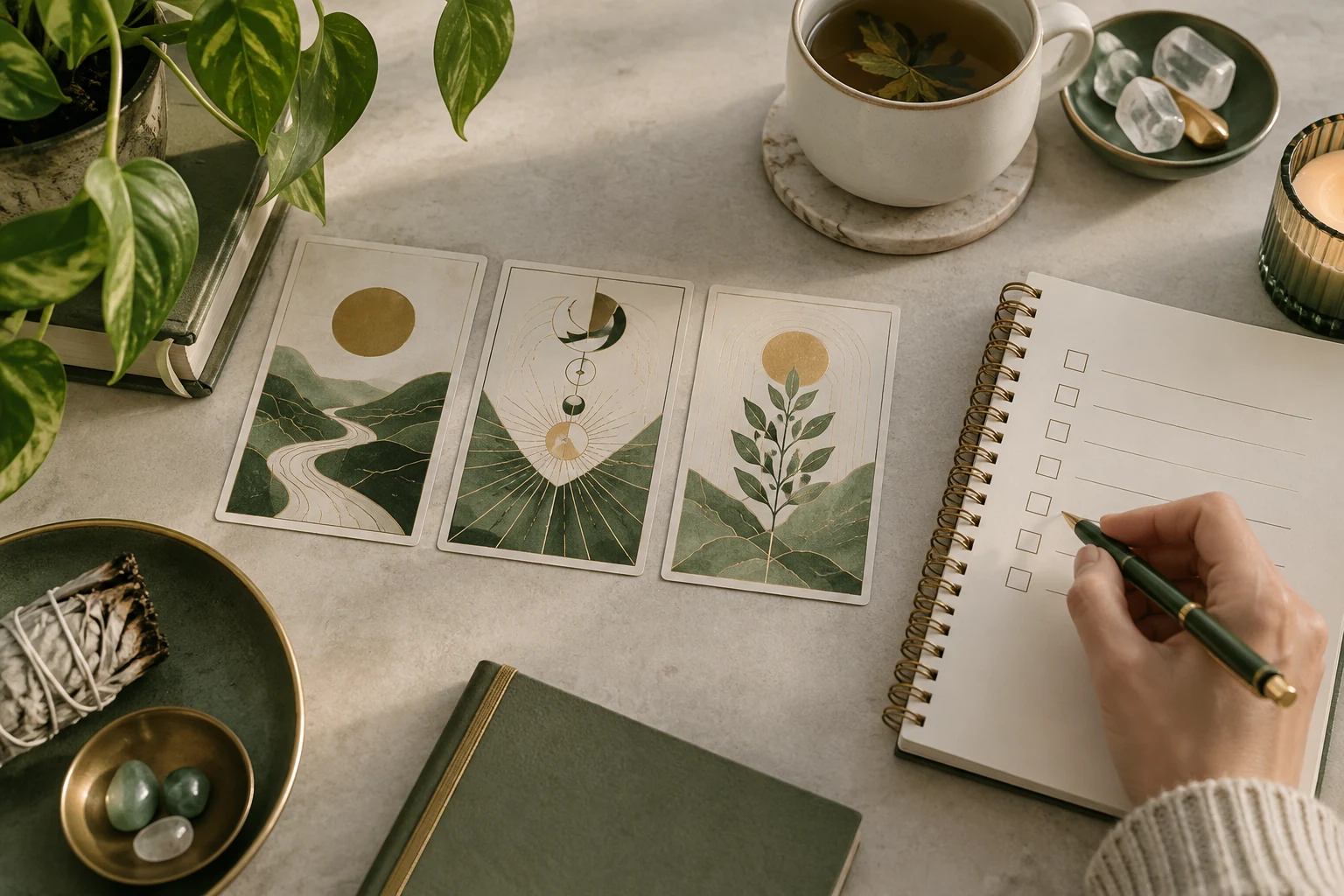
A 3 card tarot reading does not have to be reserved for big questions. It can be a short ritual at the start of the day, the end of the day, or the moment you feel mentally crowded. The key is to keep the practice light. Ask one question, draw three cards, write one sentence, and choose one reflection prompt.
You might use past, present, future on Sunday evening to review a week. You might use situation, action, outcome before a meeting or creative session. You might use mind, body, spirit when you want to check in with yourself before making plans.
When you want a simple place to practice, a gentle three-card practice can help you focus on the reading itself instead of setup. Keep your interpretation open, compare it with real life, and let the cards support awareness rather than pressure. That is where a small spread becomes genuinely useful.
FAQ
Can you do a 3 card tarot reading?
Yes. You can do a 3 card tarot reading with a physical deck or an online tarot card tool. Choose a layout, ask one focused question, draw three cards, and read them together as a connected story. Past, present, future is the most common layout for beginners.
How do I do a 3 card tarot reading for myself?
Start by writing one clear question. Decide what each position means before you draw, such as past, present, future or situation, action, outcome. Pull three cards, place them left to right, notice patterns, then combine the card meanings with your first reaction and real-life context.
Can I read a 3-card tarot reading online?
Yes. An online 3-card tarot reading can work well when you want a quick, accessible spread without a physical deck. Treat the result as a reflection tool: pause before reading the meanings, compare the cards, and write down what the spread brings up for you.
What does the 3 card mean in tarot?
The three cards usually represent three connected positions. In the classic spread, they mean past, present, and future. In other layouts, they might mean situation, action, outcome; mind, body, spirit; or option A, option B, what to consider.
Is a 3 card tarot reading good for love questions?
It can be helpful for love questions if you keep the focus reflective. Instead of asking what someone else secretly feels with certainty, ask what dynamic you should notice, what you are bringing to the connection, and what response would be healthy or honest.
Is a 3 card tarot reading useful for career questions?
Yes, as long as you use it for reflection rather than as a replacement for practical planning. A career spread can help you explore the current situation, a useful next action, and a theme to consider before making a decision.
Do I need to memorize tarot meanings first?
No. Basic meanings help, but you can begin by observing the images, suits, numbers, and emotional tone of the spread. Over time, journaling your three card readings will help you connect traditional meanings with your own experience.