How to Pull Tarot Cards: A Beginner's Step-by-Step Guide
July 20, 2026 | By Orion Drake
Learning how to pull tarot cards is less about performing a perfect ritual and more about creating a clear, repeatable moment of reflection. You can use a physical deck, a journal, or a simple daily tarot pull when you want a quick digital starting point. The useful part is the same in every format: choose a question, mix the cards, draw with attention, and read the result as a prompt rather than a fixed answer. This guide walks through the basics for beginners, including how many tarot cards to pull, how to pull for yourself, how to pull for someone else, and how to flip and separate cards without overthinking the process.
What a Tarot Card Pull Actually Is
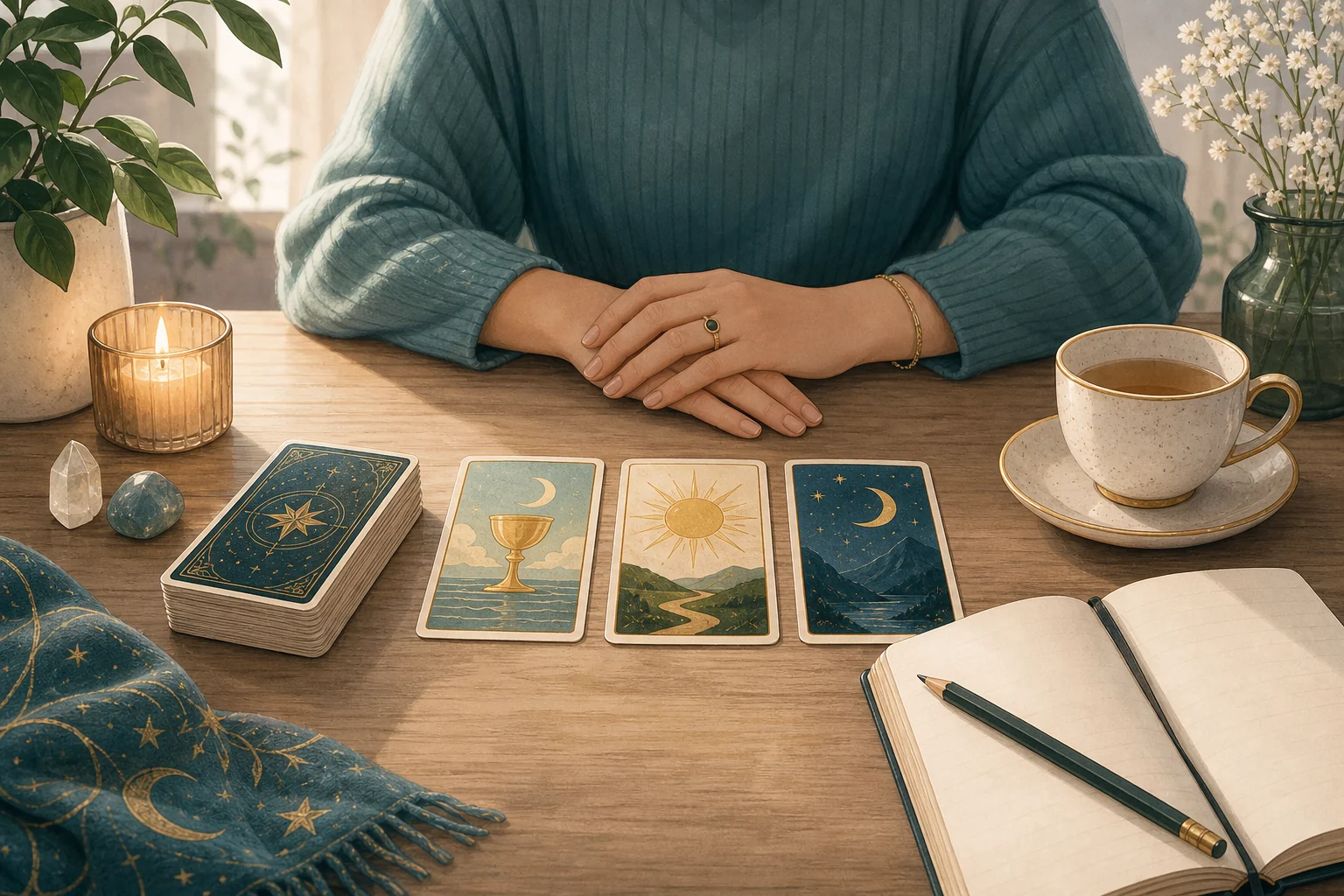
A tarot card pull is the act of selecting one or more cards from a shuffled deck and giving each card a purpose in the reading. The purpose might be simple, such as "today's focus," or more structured, such as "past, present, future" in a three card pull tarot spread.
The card does not need to be treated as a command. A healthier beginner approach is to see it as a mirror. The image, number, suit, and traditional meaning can help you notice what you already feel, what you have avoided naming, or what deserves attention. That is why a one card pull can still be useful: it narrows your attention.
If you are brand new, avoid turning the pull into a test of psychic ability. Start with curiosity. The goal is not to prove that the cards know everything. The goal is to practice asking better questions and reflecting on the answer with enough distance to see your situation freshly.
Before You Pull: Set the Question and the Tone
The simplest preparation is also the most important. Decide what kind of answer you are asking the cards to support. Open-ended questions usually work better than yes-or-no questions because they invite reflection instead of pressure.
Good beginner questions include:
- What do I need to pay attention to today?
- What energy can I bring into this situation?
- What pattern am I ready to notice?
- What would help me respond more thoughtfully?
- What is one thing I can reflect on before I act?
You do not need to say anything dramatic before pulling tarot cards. A plain sentence is enough: "I am asking for a useful reflection on today's focus." If you are reading for someone else, say the question out loud and confirm that they are comfortable with it.
The unspoken rule of tarot cards is not a secret law. It is respect for the process and the people involved. Do not use a reading to pressure someone, spy on someone, or replace professional advice. Keep the pull focused on reflection, choice, and self-awareness.
How to Pull Tarot Cards for Beginners
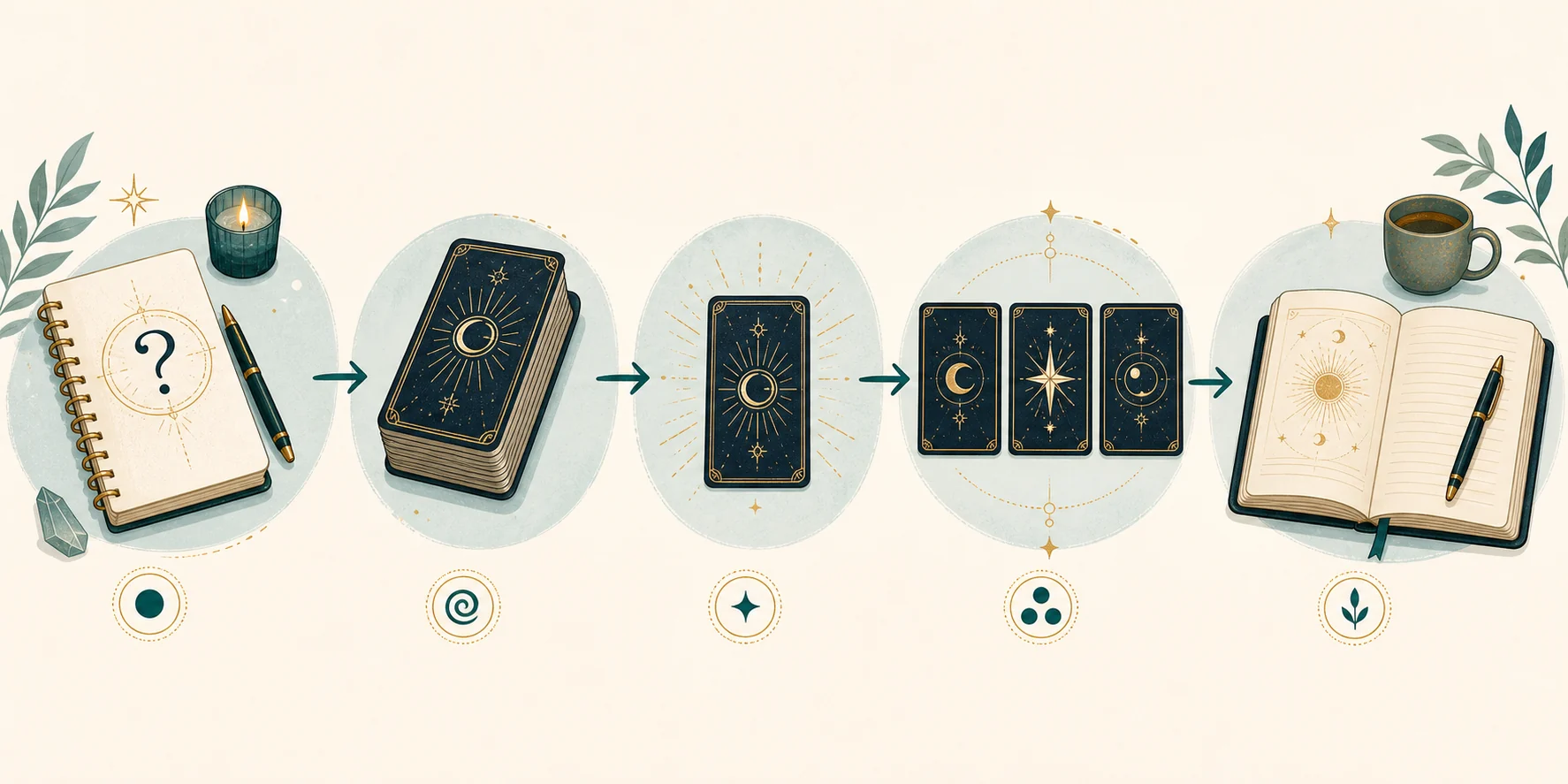
Here is a practical sequence you can repeat until it feels natural.
- Choose your deck or tool. Use a physical deck if you have one, or a digital card picker if you want a quick start without setup.
- Decide the number of cards. One card is best for a daily reflection. Three cards are useful when you want a small amount of structure.
- Ask one clear question. Keep it open-ended and focused on your own choices, feelings, or next step.
- Shuffle or randomize the deck. Mix the cards until you feel ready to stop. There is no required number of shuffles.
- Pull the card or cards. You can take from the top, cut the deck and pull from the middle, fan the cards and choose one, or use cards that naturally stand out.
- Flip each card with care. Turn cards from side to side if you want to preserve upright or reversed orientation.
- Read, reflect, and record. Write the card name, your first reaction, the traditional meaning, and one practical reflection.
If you are using an online tool, the same sequence still applies. Set your intention first, then use the random tarot card pull as the card selection step. The value comes from how you frame the question and how honestly you reflect afterward.

How Many Tarot Cards Should You Pull?
The best number depends on the size of your question. Beginners often pull too many cards because they want more certainty, but extra cards can make the reading harder to understand. Start small and add structure only when you need it.
One card is enough for a daily pull, a mood check, or a quick question such as "What should I keep in mind?" It is also the easiest way to learn tarot cards for beginners with meanings because you can spend more time with one image.
Two cards are helpful for contrast. You might use "challenge and support," "what I see and what I am missing," or "release and focus." A pair gives you more context without becoming overwhelming.
Three cards are the classic beginner step up. A 3 card pull tarot spread can represent past, present, future; situation, action, outcome; or mind, body, emotion. Use three cards when your question has movement or when you want to compare parts of a situation.
Five or more cards can be useful later, but they are not necessary when you are learning how to do a tarot card pull. More cards do not automatically mean a better reading. A clear one card pull is often more useful than a scattered ten card spread.
How to Pull Tarot Cards for Yourself
Yes, you can pull your own tarot cards. The main challenge is not permission; it is bias. When you read for yourself, you may already want a certain answer. That can make you stretch the card meaning until it says what you hoped it would say.
To keep a self-reading grounded, write the question before you pull. Then write your first impression before checking a guidebook or card meaning resource. This gives you two useful layers: your intuitive response and the more traditional meaning.
For a daily self-pull, try this format:
- Question: What should I notice today?
- Card: Write the card name and whether it appears upright or reversed, if you use reversals.
- First impression: Note one image detail that catches your eye.
- Meaning: Add two or three keywords from your guide.
- Reflection: Write one sentence about how it might apply to your day.
This keeps the pull short enough to repeat. Over time, your notes become more valuable than any single reading because they show how your understanding changes.
How to Pull Tarot Cards for Someone Else
Reading for another person adds one extra responsibility: consent. Ask whether they want a reflective reading, and agree on the question together. If they ask about health, legal issues, finances, or another person's private choices, gently reframe the question toward their own perspective and possible next step.
For example, instead of "Will my partner come back?" use "What can I reflect on as I decide how to care for myself in this relationship?" Instead of "Will I get the job?" use "What strength can I bring into this career process?"
Let the other person shuffle or choose cards if they want to be involved. If you are pulling for them, say what each card position means before you reveal the card. This avoids changing the structure after you see the result.
Use plain language when interpreting. Start with what is visible in the card, connect it to the position, and offer a few possibilities. Leave room for the other person to decide what fits. A thoughtful reading should feel like a conversation, not a verdict.
How to Flip and Separate Tarot Cards
Many beginners worry about how to flip tarot cards because they do not want to accidentally change upright and reversed meanings. If you use reversals, flip cards horizontally from side to side, like opening a book page. This preserves the card's orientation. If you flip from bottom to top, you may reverse the card by accident.
If you do not use reversals, orientation matters less. You can simply turn every card upright and read the standard meaning. Many beginners choose this method at first because it reduces complexity.
Separating tarot cards is also flexible. You can cut the deck into two or three piles after shuffling, then restack them in any order that feels natural. For a three card spread, you can also make three piles and turn over the top card of each pile.
If cards stick together, slow down. Tap the deck gently on the table to square it, then loosen the edges with your thumb. You do not need a dramatic shuffle. Overhand shuffling, gentle pile mixing, or spreading cards across a table can all work.

Use Your Pull as a Reflection Practice
After you pull tarot cards, pause before you rush to interpret every detail. Ask what the card brings up in you first. Does the image feel active, quiet, heavy, hopeful, blocked, or open? Which symbol attracts your attention? What part of the card do you resist?
Then connect the card to one practical reflection. A card does not have to tell you what will happen. It can help you name what you want to approach with more care. For example, a card associated with patience might become a reminder to slow down before replying to a tense message. A card associated with movement might invite you to take one small step instead of waiting for perfect confidence.
If you want a low-friction way to practice, explore an online tarot card generator and keep a short journal beside it. Pull one card, write three sentences, and come back later to see what still feels useful. That small habit is often enough to build confidence without making tarot feel complicated.
FAQ
Can I pull my own tarot cards?
Yes. You can pull your own tarot cards for reflection, journaling, or daily practice. The best way to keep it useful is to write your question before you pull and avoid asking the same question again and again just because you want a different answer.
What is the unspoken rule of tarot cards?
The practical unspoken rule is to use tarot with respect. Do not pressure people with a reading, do not treat cards as absolute proof, and do not use tarot as a replacement for professional advice. Keep the focus on reflection and personal agency.
What should I say before pulling tarot cards?
Say a simple intention. For example: "I am asking for a helpful reflection on what I need to notice today." You can also name the spread: "This first card is the situation, the second is support, and the third is a possible next step."
How do I pull a tarot card for myself?
Choose one open-ended question, shuffle or randomize the deck, pull one card, and write your first impression before looking up the meaning. For a daily card, keep the question broad enough to apply throughout the day.
How many cards should I pull for a tarot reading?
Pull one card for a quick daily reflection, two cards for contrast, and three cards for a simple spread. Beginners usually learn faster with fewer cards because each card gets more attention.
How do I pull tarot cards for someone else?
Ask for consent, agree on the question, explain the card positions, and keep the interpretation open. Focus on the person's choices, feelings, and possible next step rather than making fixed predictions about other people.
How should I flip tarot cards?
If you read reversals, flip each card from side to side so the orientation stays the same. If you do not use reversals, you can turn the card upright and focus on the main meaning.