Minor Arcana Guide: Tarot's 4 Suits Explained
January 26, 2026 | By Orion Drake
Have you ever drawn a tarot card and felt a little lost? The Major Arcana cards like The Fool or The Magician are famous, but the other 56 cards—the Minor Arcana—often feel like a mystery. What do all those numbers and suits really mean? If you're ready to unlock the practical, day-to-day wisdom of the tarot, this guide is for you.
The Minor Arcana tells the story of our daily lives, from career ambitions to relationships. Understanding its structure is the key to clearer, more insightful readings. It transforms the tarot from mysterious symbols into a practical tool for self-discovery. A great way to start exploring these cards is with a random tarot reading, which can help you see these patterns in action.
This guide will break down the Minor Arcana into simple, easy-to-understand parts. We will explore the four suits, what the numbered cards represent, and how to interpret them in your own readings. By the end, you'll feel more confident in your ability to read the cards and apply their messages to your life.
Understanding the Structure of Minor Arcana
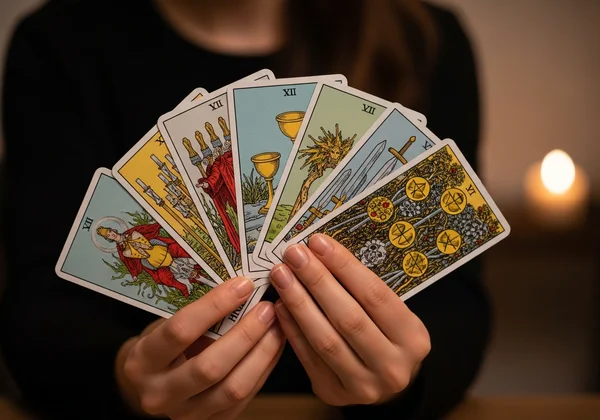
The Minor Arcana might seem complex, but it has a very logical structure. It's divided into four suits, much like a standard deck of playing cards. Each suit contains 14 cards: ten numbered cards (Ace through Ten) and four Court Cards (Page, Knight, Queen, and King).
The Role of Minor Arcana vs. Major Arcana
Think of the Major Arcana as the big, life-changing spiritual lessons on your journey. In contrast, the Minor Arcana represents the everyday situations, feelings, and actions that make up that journey. They are the practical steps, the small victories, and the daily challenges we all face.
The Four Suits and Their Elements
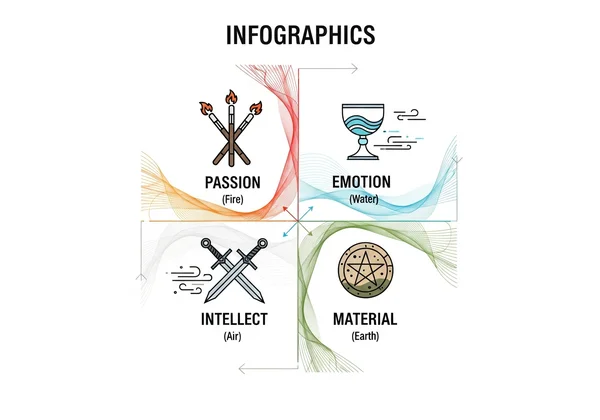
Each of the four tarot suits is connected to a classical element and governs a specific area of life. Understanding these connections is the first step in any Minor Arcana guide.
- Wands (Fire): This suit represents passion, action, creativity, and willpower. When you see a Wands card, think of energy, movement, and the spark of a new idea. It’s about your drive, ambition, and what inspires you to act.
- Cups (Water): This suit governs the world of emotions, relationships, intuition, and feelings. Cups cards speak to matters of the heart, love, friendships, and your inner emotional state. They are all about connection and how you feel.
- Swords (Air): This suit is connected to your thoughts, intellect, challenges, and communication. Swords cards often represent conflict, truth, and difficult decisions. They challenge you to use your mind with clarity and honesty.
- Pentacles (Earth): This suit relates to the material world. This includes your finances, career, health, and home. Pentacles cards are about practical matters, long-term security, and your connection to the physical world.
Learning these basic associations will dramatically improve your ability to understand a reading at a glance. When you're ready to see how these suits appear in a spread, you can get a free tarot reading to test your knowledge.
The Numbered Cards: From Ace to Ten
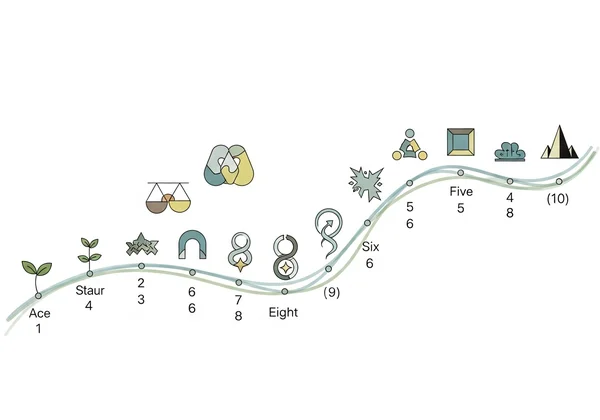
Within each suit, the numbered cards tell a story of progression. The journey begins with the Ace and concludes with the Ten, showing how the energy of that suit develops.
- Ace: Represents new beginnings, potential, and the raw energy of the suit. An Ace of Cups, for example, is a new emotional start.
- Two: Symbolizes balance, partnership, and choices. It's often about bringing two things together or making a decision.
- Three: Represents initial growth, collaboration, and the first results of your actions.
- Four: Signifies stability, structure, and sometimes stagnation. It’s a moment to rest and consolidate.
- Five: Introduces conflict, change, and challenge. This number often brings a period of instability that forces growth.
- Six: Represents harmony, giving, and receiving. It’s about finding balance after the conflict of the Five.
- Seven: Symbolizes assessment, reflection, and planning. It’s a time to evaluate your progress and decide on the next steps.
- Eight: Represents movement, action, and progress. It’s about putting the plans from the Seven into motion.
- Nine: Signifies near-completion and fulfillment. You are close to your goal but may have one final hurdle.
- Ten: Represents completion, endings, and the ultimate expression of the suit's energy. A Ten of Pentacles, for instance, is the peak of material security.
This numerical journey provides a clear framework for your Minor Arcana interpretations, helping you understand where you are in a particular situation.
Suit of Wands Meaning: The Element of Action
The Suit of Wands is all about fire, energy, and passion. When these cards appear in a reading, they urge you to take action, follow your inspiration, and embrace your creative power. Wands are the "doing" cards of the tarot deck. They are associated with ambition, growth, and the courage to pursue your goals.
If you draw a Wands card, the universe is likely telling you to move forward with confidence. These cards can signify a new project, a burst of creative energy, or the drive to make things happen. They encourage you to step into your power and not be afraid to chase what you want. Eager to see if a Wands card appears for you? Draw a card and find out what the universe wants you to do.
Wands in Career Contexts
In a career reading, Wands cards are an excellent sign. They point to ambition, leadership, and new opportunities for growth. For example, the Ace of Wands could signal the start of a new job or a passion project. The Three of Wands suggests looking ahead and expanding your business.
These cards encourage you to be bold in your professional life. Are you thinking about asking for a promotion or starting your own company? The appearance of Wands cards supports these ambitious moves. They remind you that your passion and drive are your greatest assets.
Wands in Relationships
In love readings, the Suit of Wands brings heat and excitement. These cards often point to a passionate, dynamic connection filled with energy. The Two of Wands might indicate you are planning a future with a partner. The Knight of Wands can represent a charming, adventurous suitor entering your life.
However, the fire of the Wands can also be impulsive. It can represent a relationship that burns brightly but quickly. It may also signify a connection based more on physical attraction than deep emotional bonding. It’s important to balance the passion of the Wands with the emotional depth of the Cups to build a lasting relationship.
Minor Arcana Interpretations: Beyond Basic Meanings
Once you understand the basics of the suits and numbers, you can start to develop deeper interpretations. The true magic of tarot lies in how the cards interact with each other and their position in a spread. This is where you move from knowing definitions to telling a story.
A single card provides a snapshot, but a spread provides the full picture. The context of the surrounding cards can completely change a card's meaning. This is why using a tool that provides themed spreads can be so helpful for learning. You can try our tool to see how different cards combine in a reading.
Combining Cards in Spreads
No card exists in a vacuum. When you see multiple Minor Arcana cards together, look for patterns. Are there a lot of Wands cards? This indicates a situation driven by action and passion. Is the spread dominated by Swords? You may be facing a period of mental challenges and tough decisions.
For example, seeing the Five of Wands (conflict) next to the Six of Cups (nostalgia, harmony) could suggest a disagreement with someone from your past. The Five of Swords (defeat) followed by the Ten of Pentacles (security) could mean that a difficult loss will ultimately lead to long-term stability. Learning to weave these stories is a key skill.
Reversed Minor Arcana: What Different Positions Mean
When a card appears upside down, it is "reversed." A reversed card doesn't necessarily mean the opposite of its upright meaning. Instead, it often points to a blocked, delayed, or internalised energy.
For instance, an upright Ace of Wands is a new spark of passion. A reversed Ace of Wands might indicate a creative block or a lack of inspiration. An upright Eight of Pentacles shows dedication to mastering a skill. Reversed, it could mean you're working hard but not seeing results, or perhaps you're being a perfectionist. Seeing a reversed card is an invitation to look within and see what energy is being held back.
Applying Minor Arcana Insights to Your Daily Reading Practice
Think of the Minor Arcana as a unique language that speaks directly to your everyday experiences. The four suits give you a framework for understanding your passions, emotions, thoughts, and material world. The numbered cards show you where you are on your journey, from a new beginning to a final completion.
As you explore the Minor Arcana, remember these core principles:
- The four suits—Wands, Cups, Swords, and Pentacles—correspond to different areas of your life.
- The numbered cards from Ace to Ten represent a cycle of development and growth.
- The meaning of a card is influenced by its surrounding cards and whether it appears upright or reversed.
The best way to become fluent in this language is through practice. Don't just read about the cards; interact with them. Draw a card each day and reflect on how its energy shows up in your life. You'll soon find that the Minor Arcana provides practical, actionable guidance for any situation you face.
Ready to put your new knowledge to the test? Visit Random Tarot Card to draw a card and get a personalized interpretation. It's the perfect way to begin your journey of self-discovery.
FAQ Section
What should I ask daily for tarot pulls?
For daily tarot pulls, it's best to ask open-ended questions that focus on personal growth and guidance. Instead of "Will I get the job?", try asking, "What energy should I focus on today?" or "How can I be my best self today?". Good questions include "What do I need to be aware of?" or "What message does the universe have for me?". This approach turns your daily draw into a tool for mindfulness and self-reflection.
How often can I read my own tarot?
You can read your own tarot as often as you feel comfortable. Many people enjoy pulling a single card each morning to set the tone for their day. For bigger questions, it's wise to give yourself time to process the reading before asking again. The goal is to seek guidance, not to become dependent. If you're feeling anxious, take a break. Our site is a great place for a quick daily reading when you need a moment of clarity.
Can you overuse tarot?
Yes, it is possible to overuse tarot. If you find yourself asking the same question repeatedly or feeling anxious if you don't get the answer you want, it may be a sign to step back. Tarot is a tool for empowerment and insight, not a crutch. Use it to connect with your intuition, but remember that you have the power to make your own decisions. A healthy practice involves using the cards for reflection, not for constant reassurance.