Past Present Future Tarot: How to Read a Simple Timeline
March 21, 2026 | By Orion Drake
This spread is a natural next step after a random draw. It gives more context than a 1-card pull. It still feels light enough for a daily ritual, a journal check-in, or a simple question that does not need a large spread.
That balance is exactly why the format works so well on a digital tarot site. A 3-card timeline gives readers a small structure to think with: where this theme came from, what it is doing now, and what direction it may be moving toward.
Many guided [past-present-future reading formats] begin by asking readers to focus on one specific situation instead of a vague life question. That same approach fits the tarot spread homepage well, because the site is built for quick reflection rather than a heavy prediction ritual.
Why a three-card timeline feels easier than a bigger spread
A large spread can be exciting, but it can also overwhelm new readers. More cards create more symbols, more relationships, and more pressure to interpret everything at once. A past present future layout stays small enough to hold in mind.
It also gives each card a job. Instead of wondering what any random combination might mean, the reader already has a time-based frame. That makes the spread easier to read calmly, especially when the question is personal or emotionally loaded.
For many beginners, this is the point where tarot starts feeling usable. The spread is simple, but it still opens a story.
What the past present future tarot spread is meant to do
The spread works best when it is treated like a reflection tool, not a fixed forecast.
What each card position usually represents
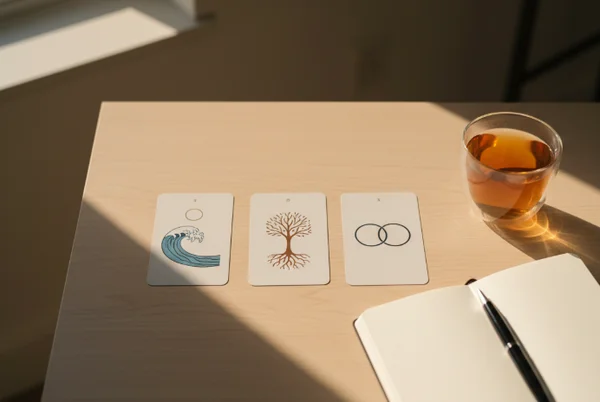
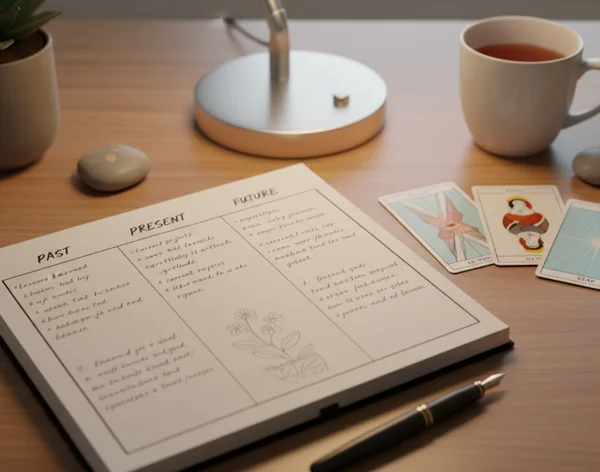
The layout is simple. In standard beginner teaching, the left card is the past. The middle card is the present. The right card is the future.
Read in order, the cards create a short timeline that helps the situation unfold instead of appearing all at once. That does not mean the future card should be read like a locked event. A better approach is to treat it as the direction the current pattern may be pointing toward. The past helps explain context. The present shows what is active now. The future suggests what might develop if the same energy continues.
This softer frame keeps the spread aligned with the random tarot tool, which is built for guidance, self-reflection, and entertainment rather than certainty.
When this spread is more useful than one card tarot
A 1-card pull is excellent when the goal is a theme, a mood, or a quick daily anchor. A 3-card timeline is better when the reader wants a little movement inside the answer.
One card can ask, "What energy should I notice today?" A past present future tarot spread can ask, "What pattern led here? What is active now? What is this moving toward?" That makes it especially helpful for habits, repeating emotions, and simple crossroads.
It is still a low-pressure spread. The reader gets structure without turning the draw into a major event.
Three everyday questions that fit this spread well
The best questions are specific enough to focus the reading, but open enough to invite reflection.
A question about a repeating emotional pattern
This spread works well when a feeling keeps returning and the reader wants more context. A question like "What is this tension trying to show me?" invites the cards to look at where the pattern started, how it is showing up now, and what it may become if nothing changes.
That kind of reading is often more useful than asking whether the feeling will simply disappear. The timeline gives the pattern a shape.
A question about a choice or crossroads
Some decisions are too layered for a 1-card answer. A 3-card spread can help a reader explore what led to the choice, what matters in the current moment, and what direction seems to be opening if they keep following the same path.
This is especially helpful when the goal is clarity, not permission. The spread does not have to decide for the reader. It can simply show what the situation looks like across time.
A question about what today's draw is building toward
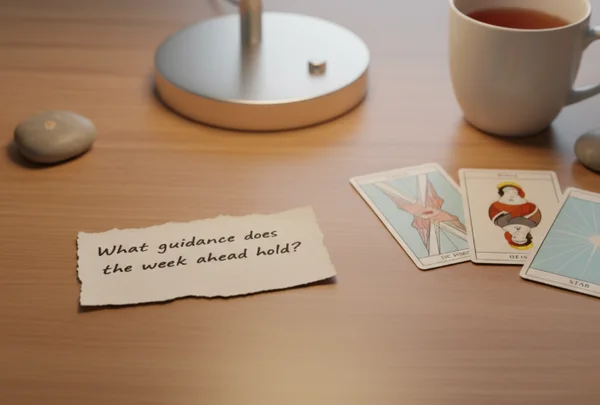
Daily readers sometimes pull one card and still feel curious. In those moments, the past present future format can expand the question without making it complicated. It turns a single mood into a short arc.
This makes the spread a good bridge between a quick daily habit and a more thoughtful journaling practice. It stays simple, but it offers more room for meaning.
How to keep the reading reflective instead of rigid
A helpful spread feels open, specific, and grounded in the reader's own reflection.
Read the cards as a conversation, not a verdict
A timeline spread is easy to over-literalize because the word future sounds definite. That is why it helps to remember that the future card is not a command. It is part of a conversation.
One useful way to read it is this: the past card names the backdrop, the present card names the live pattern, and the future card names the direction that pattern may take. The future is not set in stone. It is a prompt to notice momentum.
That mindset keeps the reading flexible. It also makes it easier to return to the spread later and see how the situation actually unfolded.
What to write down after the spread
The simplest journaling method is also the most repeatable. Write the question, the 3 cards, and 2 or 3 keywords for each position. Then add one short note about what seems to connect them.
If the reading feels important, come back to it later. Notice which card made the most sense after a few days, which part of the present card still feels active, and whether the future card described a direction rather than a literal event. Readers who revisit old pulls often get more insight from comparison than from the first interpretation alone.
That is part of what makes a digital spread so practical. The three-card draw option is easy to repeat, but the insight usually comes from noticing patterns over time, not from demanding a perfect answer on the first try.
Next steps after your three-card tarot pull
Past present future tarot works because it gives a small reading enough movement to feel meaningful. It does not ask the reader to master a complex system before they can start.
If a 1-card pull feels too brief and a large spread feels too heavy, this is the middle ground. It offers structure, reflection, and just enough story to make the cards easier to sit with.
If you want to try that format directly, the daily pull tool can be a simple place to begin. Start with one focused question, read the cards as a timeline, and let the spread guide reflection rather than a rigid prediction.