Tarot Card Deck Guide: 78 Cards, Suits, Meanings, and Beginner Choices
June 8, 2026 | By Orion Drake
A tarot card deck can look mysterious from the outside, but its structure is surprisingly learnable. Most people first want three answers: how many cards are in a tarot deck, what the suits mean, and which deck is best for a beginner. This guide gives you a practical tarot card deck list, explains the 78-card system in plain English, and shows how classic, beautiful, artistic, and online decks can each support a different kind of practice. If you want to explore gently before buying physical cards, a simple online tarot card pull can help you test the rhythm of one-card reflection first.
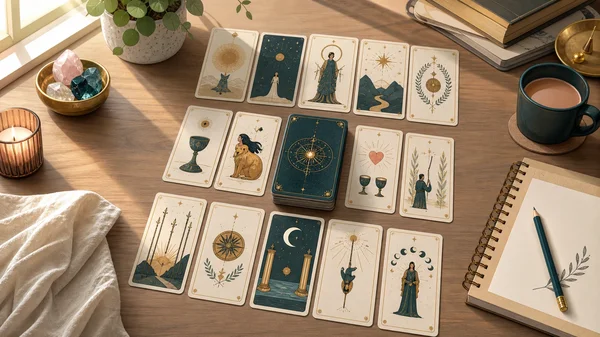
What Is a Tarot Card Deck?
A tarot card deck is a set of cards used for symbolic reading, journaling, meditation, creative reflection, and traditional divination. In modern beginner practice, it works best as a visual language. You draw one or more cards, notice the image, read the basic meaning, and ask what the card brings into focus.
The standard deck has 78 cards: 22 Major Arcana cards and 56 Minor Arcana cards. The Major Arcana usually speaks to large themes, turning points, and archetypal experiences. The Minor Arcana brings the reading closer to everyday choices, emotions, work, communication, relationships, and habits.
Not every deck looks the same. A Rider Waite Smith style deck may feel familiar because many guidebooks use its imagery. A Marseille deck may look older and more symbolic. A modern artistic deck may use fresh colors or minimalist design. The best tarot card deck is the one you can read with curiosity and consistency.
Tarot Card Deck List: The 78-Card Structure
When people search for a tarot card deck list, they are usually asking what cards belong in the deck and how those cards are grouped. The simplest answer is this: 22 Major Arcana cards plus 56 Minor Arcana cards.
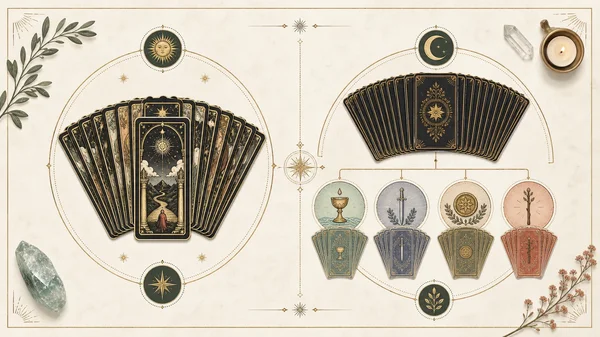
The 22 Major Arcana Cards
The 22 Major Arcana cards are often numbered from The Fool through The World, though deck traditions may vary slightly in ordering. A common tarot card list includes The Fool, The Magician, The High Priestess, The Empress, The Emperor, The Hierophant, The Lovers, The Chariot, Strength, The Hermit, Wheel of Fortune, Justice, The Hanged Man, Death, Temperance, The Devil, The Tower, The Star, The Moon, The Sun, Judgement, and The World.
These cards are memorable because each one carries a large symbolic scene. The Fool can suggest openness or a new path. The Hermit can point toward solitude or study. The Tower may represent disruption, while The Star often suggests renewal and hope. These are not fixed predictions. They are prompts for naming what feels important.
The 56 Minor Arcana Cards
The Minor Arcana is divided into four suits. Each suit usually has ten numbered cards and four court cards, making 14 cards per suit and 56 cards total. The numbered cards move from Ace through Ten. The court cards are often Page, Knight, Queen, and King, though some decks rename them.
Minor Arcana cards are useful because they make tarot feel less abstract. They bring the reading into daily life: a conversation, a decision, a habit, a mood, a creative block, or a practical next step. If the Major Arcana is the big chapter title, the Minor Arcana is the paragraph you are living through today.
Tarot Card Deck Suits and What They Suggest
Tarot card deck suits give the Minor Arcana its shape. The names can vary by tradition, but many modern decks use Cups, Wands, Swords, and Pentacles. If you use an online tool that can draw from the full deck or focus only on the Major Arcana, a random full-deck or Major Arcana draw can help you feel the difference between a broad reading and a more archetypal one.
Cups
Cups are usually linked with feelings, relationships, intuition, care, imagination, and emotional flow. A Cups card may invite you to notice what you want, what you are protecting, what feels tender, or where connection is asking for attention.
Wands
Wands often relate to energy, creativity, desire, initiative, courage, and momentum. In a daily pull, a Wands card might point toward motivation, frustration, inspiration, or the need to direct your effort more clearly.
Swords
Swords are commonly associated with thought, language, conflict, decisions, truth, and mental patterns. They can be sharp cards, but not because they are bad. They often ask you to examine assumptions, name a difficult conversation, or make room for clearer thinking.
Pentacles
Pentacles, also called Coins in some decks, tend to focus on material life: work, money habits, time, health routines, home, skills, and the body. They are especially helpful when your question is practical rather than purely emotional.
Classic Tarot Deck Meanings vs. Beautiful Tarot Decks
Classic tarot deck meanings are easiest to learn when the imagery has a clear relationship to common guidebook language. This is why many beginners choose a Rider Waite Smith inspired deck. Its figures, landscapes, colors, and symbols are widely referenced, so it is easier to compare your deck with learning resources.
Beautiful tarot decks can be just as useful, but beauty alone is not enough. A deck may be visually stunning while still being hard to read. Some artistic beautiful tarot decks replace familiar symbols with abstract shapes, fashion imagery, animals, fantasy scenes, or modern collage. That can be inspiring once you have a foundation, but it can slow you down if every card requires too much guessing.
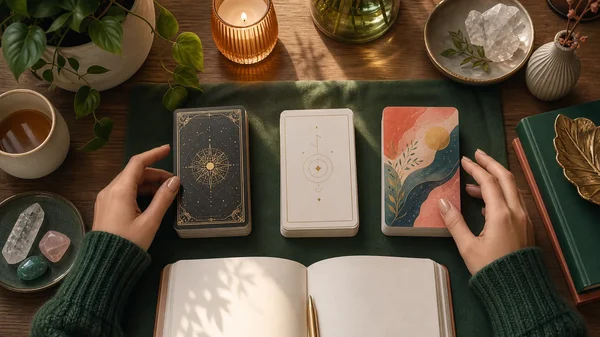
Choose a deck that feels attractive and readable. You do not need to understand every symbol on day one, but you do need enough visual information to build a relationship with the cards.
How to Choose the Best Tarot Card Deck for Beginners
The question "which tarot card deck is best?" has no single answer, but beginners can make the decision easier with a few filters.
First, decide whether you want a physical deck, an online tarot card deck, or both. Physical cards add texture and ritual. An online deck is fast, accessible, and useful before you buy.
Second, check the imagery. Before buying tarot cards online, look for sample images from several cards, not just the box cover. If possible, review one Major Arcana card, one Cups card, one Wands card, one Swords card, and one Pentacles card. That small sample tells you more than a single beautiful product photo.
Third, look for a guidebook or clear card references. A beginner-friendly tarot card deck should make it easy to learn meanings without sending you into a maze. A short guidebook, readable card titles, and familiar symbolism can make the first month much less frustrating.
Fourth, consider size and handling. Oversized cards may look dramatic in photos but can be hard to shuffle. Tiny cards travel well but may hide important details. If you journal with tarot, choose a deck that is comfortable enough to use repeatedly, not just one that looks impressive on a shelf.
Finally, buy from a trustworthy seller when possible: a legitimate publisher, the deck creator, a known bookstore, or a reputable shop with clear product details. Be cautious with copied artwork, hidden publishers, or poor scans.
Can You Use Playing Cards as a Tarot Deck?
You can use playing cards for a tarot-inspired reading, but a playing card deck is not the same as a full tarot card deck. A standard playing card deck has four suits and numbered or court-style cards, so it can loosely echo parts of the Minor Arcana. Hearts may be compared with Cups, Clubs with Wands, Spades with Swords, and Diamonds with Pentacles.
The important limitation is that playing cards do not include the 22 Major Arcana cards. That means you lose cards such as The Fool, The Lovers, The Hermit, The Devil, The Star, and The World. If you only want a quick reflection exercise, playing cards can be an accessible option. If you want to learn classic tarot deck meanings, a real tarot card deck will give you the full structure.
Use Your Tarot Card Deck as a Daily Reflection Tool
Once you understand the deck, the next step is simple: use it lightly and regularly. You do not need a complicated spread every time. A one-card pull can ask, "What should I notice today?" A two-card pull can compare "what is active" and "what needs care." A past-present-future spread can help you place a question into a short timeline.
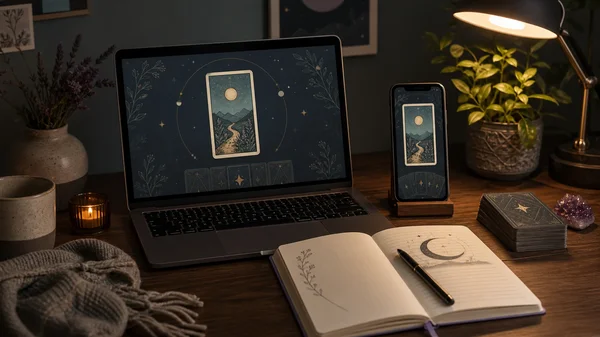
If you are new, keep your practice low-pressure. Write the card name, three details you notice in the image, one traditional meaning, and one question the card raises. Over time, this turns the deck from a confusing set of pictures into a personal vocabulary for reflection. You can also use daily tarot card practice as a gentle way to compare online pulls with what you notice in your own cards.
Tarot is most useful when it supports attention rather than replacing judgment. Let the deck offer a prompt, not a command. If a reading touches medical, legal, financial, or other serious decisions, treat the cards as reflective notes and bring the real-world question to the appropriate professional or trusted support.
FAQ
What is a deck of tarot cards called?
It is usually called a tarot deck or tarot card deck. Some people also say tarot cards deck in casual speech, but tarot deck is the most natural phrase. A standard deck contains 78 cards, divided into the Major Arcana and Minor Arcana.
How many cards are in a tarot deck?
Most modern tarot decks have 78 cards. The usual structure is 22 Major Arcana cards and 56 Minor Arcana cards. A few specialty decks add extra cards, rename cards, or change suits, so check the deck guide if you are using a nontraditional set.
What are the 22 major tarot cards?
A common list is The Fool, The Magician, The High Priestess, The Empress, The Emperor, The Hierophant, The Lovers, The Chariot, Strength, The Hermit, Wheel of Fortune, Justice, The Hanged Man, Death, Temperance, The Devil, The Tower, The Star, The Moon, The Sun, Judgement, and The World. Some traditions switch the order of Strength and Justice.
What is the tarot card for Gemini?
Gemini is commonly associated with The Lovers in many astrology-tarot correspondences. The link makes symbolic sense because Gemini often raises themes of choice, communication, duality, and relationship. Associations can vary by system, so treat this as a learning reference rather than a fixed rule.
What tarot card is associated with Aquarius?
Aquarius is commonly associated with The Star. The Star often suggests renewal, long-range vision, hope, and a calm sense of direction after disruption. As with all correspondences, different teachers or decks may frame the connection differently.
What does The Devil card mean in a tarot deck?
The Devil card often points to attachment, temptation, avoidance, shame, or a pattern that feels difficult to loosen. It does not mean something evil is certain to happen. In reflective practice, it can ask where you feel stuck and what would help you regain choice.
Should beginners use a Rider Waite tarot deck?
A Rider Waite Smith inspired deck is often helpful because its imagery is widely taught and easy to cross-reference. Beginners do not have to use it forever, but it can be a practical first deck if you want classic tarot deck meanings and many learning resources.
Is an online tarot card deck useful?
Yes, an online tarot card deck can be useful for quick daily reflection, testing one-card pulls, or learning card meanings before buying a physical deck. It works best when you treat the result as a prompt for journaling and self-awareness, not as a replacement for personal judgment.