Tarot Card Guide: What One Card Means in the 78-Card Deck
June 1, 2026 | By Orion Drake
Searching for a card tarot card explanation usually means one thing: you want a clear way to understand the card in front of you without memorizing an entire tradition first. A tarot card is not just a picture with a fixed answer. It is a symbolic prompt shaped by its suit, number, archetype, position, and the question you bring to it. If you want to begin gently, a simple random tarot card pull can give you one card to study, journal about, and compare with the wider 78-card tarot deck.
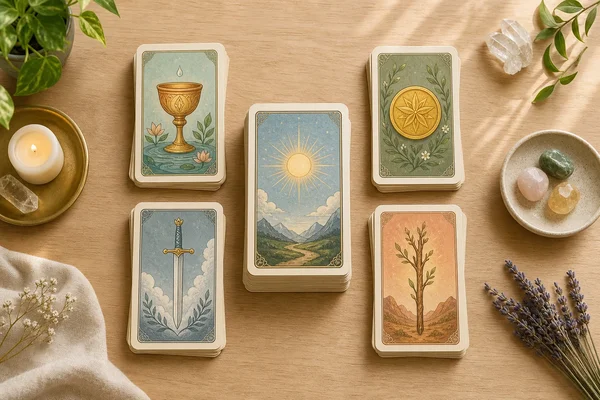
What a Tarot Card Is Really Showing You
A tarot card works best when you treat it as a focused reflection object. The image gives you symbols, the card name gives you a theme, and the deck structure gives that theme context. The same card can feel different depending on whether you ask about a choice, a habit, a relationship dynamic, or a daily mood.
That does not mean a tarot card should replace practical judgment. A reading is most useful when it helps you slow down, name a pattern, and notice a possible next question. It can suggest a tone, a tension, or a useful angle, but it should not be used as a medical, legal, financial, or relationship authority.
For beginners, the simplest rule is this: read the card in layers. Start with the picture. Notice the suit or Major Arcana title. Then connect it to the question you asked. You do not need to know every historical association before a one-card reading can be meaningful.
The 78 Tarot Cards List in Plain English
Most modern tarot decks contain 78 cards. They are usually divided into 22 Major Arcana cards and 56 Minor Arcana cards. That structure matters because it helps you decide how much weight to give a card in a reading.
The Major Arcana cards usually point to larger life themes, turning points, archetypes, and inner lessons. The Fool, The Magician, The High Priestess, The Lovers, The Chariot, The Tower, The Star, and The World are examples. When a Major Arcana card appears in a one-card tarot reading, many readers treat it as a signal to look at the bigger pattern behind the day.
The Minor Arcana cards are more everyday. They are divided into four suits:
- Cups often connect with emotions, relationships, intuition, and care.
- Pentacles or Coins often connect with work, resources, the body, and practical stability.
- Swords often connect with thought, conflict, communication, and decisions.
- Wands often connect with energy, creativity, desire, and action.
Each suit includes numbered cards and court cards. The numbered cards can describe stages of a situation, while Pages, Knights, Queens, and Kings often show roles, attitudes, or styles of action. This is why a tarot cards meaning list with pictures can be helpful: the image, suit, number, and title all work together.
How to Read One Card Without Overloading It
A one-card tarot reading is useful because it limits the noise. Instead of trying to interpret seven relationships between cards, you focus on one symbol and one question. The tradeoff is that one card should be treated as a prompt, not a full report.
Before you pull, ask a question that leaves room for reflection. "What should I notice today?" is usually stronger than "Will this exact thing happen?" If you are using the Random Tarot Card tool, you can choose a simple single-card pull, pause for a moment, and then write down the first three things you notice.
Try this short one-card checklist:
- What is the card's first emotional impression?
- Is it Major Arcana or Minor Arcana?
- If it is Minor Arcana, what suit is it in?
- What detail in the image stands out most?
- What is one grounded action or reflection question it suggests?
For a one card tarot yes/no question, avoid treating the card as a strict verdict. A clearer method is to read the card as a leaning. A card associated with flow, clarity, or support may suggest openness. A card associated with delay, confusion, or strain may suggest caution. The real value is often the follow-up question: "What would make this choice wiser?"
One Card, Three Cards, and Seven Cards: When Each Helps
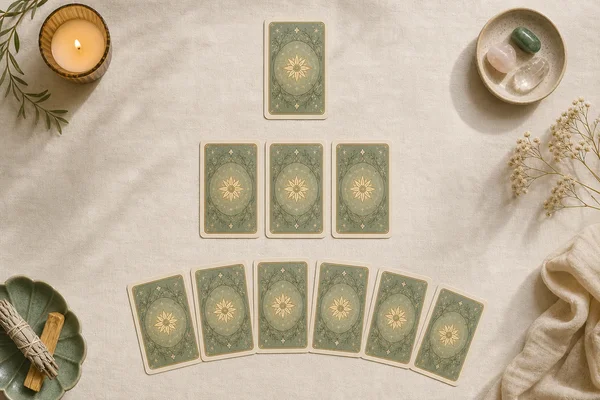
Different reading sizes answer different needs. A one-card reading is best when you want a quick daily theme, a journaling prompt, or a gentle check-in. It is also a good format when you are still learning all tarot cards and do not want to manage too many meanings at once.
A free 3 card tarot reading is usually better when the question needs movement. Many readers use three cards for past, present, future; situation, challenge, advice; or mind, body, emotion. The extra cards can show contrast, but they also require more interpretation.
A 7 card tarot reading free format is more detailed. It can explore layers such as background, hidden influence, advice, obstacle, likely direction, personal role, and final reflection. That can be useful for a complex question, but it may be too much for a casual daily pull.
The practical choice is simple:
- Use one card when the question is immediate.
- Use three cards when you need a small story.
- Use seven cards when the question has several moving parts.
No spread size is automatically better. The best spread is the one that matches your attention span, your question, and your willingness to reflect honestly.
Building a Personal Meaning List
Many beginners search for a 78 tarot cards list or a tarot card meanings PDF because they want a stable reference. That can help, but the strongest meaning list is the one you build while practicing. A public list gives you common associations. Your notes show how the card actually lands in your questions over time.
Create a simple card log with five columns:
| Field | What to Record |
|---|---|
| Card | The card name and whether it is upright or reversed if you use reversals |
| Deck area | Major Arcana, Cups, Pentacles, Swords, or Wands |
| First impression | The mood, symbol, or phrase that stood out |
| Common meaning | A short phrase from your trusted reference |
| Personal reflection | How it connected to your question or day |
This turns tarot card meaning into a living practice instead of a memorization test. Over time, you may notice that some cards repeat during certain types of questions. You may also see that your first impression changes as your life context changes. That is normal. Tarot is partly a symbolic language and partly a mirror for attention.
Pictures help because tarot is visual. If a card shows water, a road, a figure looking away, a bright sky, or a closed gate, those details can guide your reading before you look up a definition. The card image is not decoration. It is part of the meaning.
Common Mistakes When Reading a Single Tarot Card
The first mistake is asking a question that is too absolute. Tarot is more helpful with questions like "What should I consider?" than questions that demand a fixed outcome. Open questions invite reflection; closed questions often create anxiety.
The second mistake is reading only the card title. Death, The Devil, The Tower, and Judgement can sound intense, but their meanings are broader than the names suggest. Death often points to endings and transition. The Devil often points to attachment, habit, or limitation. The Tower often points to disruption and revelation. Judgement often points to review, awakening, or accountability.
The third mistake is ignoring the deck structure. A Minor Arcana Five of Cups has a different scale from a Major Arcana card like The Moon. One may describe a painful emotional moment. The other may suggest uncertainty, dreams, illusion, or a deeper intuitive process.
The fourth mistake is forcing the card to answer everything. One card can be enough for a daily theme, but it is not enough to settle every detail of a complicated situation. If your question keeps expanding, use the card to choose your next practical question rather than stretching one symbol too far.
Make Your Next Tarot Card Pull More Useful
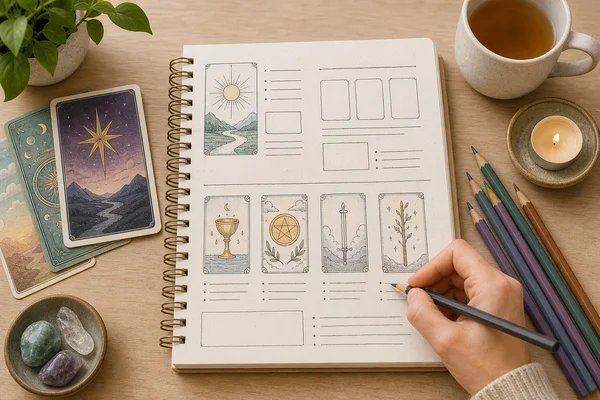
The next time you pull one card, make the process small enough to repeat. Choose one question, pull one card, write three observations, and end with one gentle action or reflection prompt. You can return to a one-card reflection session whenever you want a quick symbolic focus without setting up a full deck or a complex spread.
If you want more depth, expand slowly. Compare one card with a three-card spread. Keep a personal meaning list. Learn the four suits. Notice which Major Arcana cards feel most direct to you. The goal is not to make tarot mysterious or final. The goal is to make each card easier to read, easier to question, and easier to bring back into ordinary life.
FAQ
What are the 4 types of tarot cards?
People often use "4 types" to mean the four Minor Arcana suits: Cups, Pentacles or Coins, Swords, and Wands. Cups usually relate to emotion, Pentacles to practical life, Swords to thought and communication, and Wands to energy or action. In a broader learning sense, you can also group tarot into Major Arcana, Minor Arcana, numbered cards, and court cards.
What is the 7 major tarot card?
The seventh numbered Major Arcana card is usually The Chariot, shown as VII in many decks. The Chariot often connects with direction, willpower, movement, discipline, and the effort to guide opposing forces toward one path. If someone counts The Fool as the first card instead of card zero, the count can shift, so it helps to check the numbering system of the deck you are using.
What are the 56 tarot cards?
The 56 tarot cards are the Minor Arcana. They are divided into four suits of 14 cards each: Cups, Pentacles or Coins, Swords, and Wands. Each suit usually has Ace through Ten plus Page, Knight, Queen, and King. These cards tend to describe everyday situations, choices, moods, habits, and interactions.
How many cards are in a tarot deck?
Most standard tarot decks have 78 cards: 22 Major Arcana cards and 56 Minor Arcana cards. Some oracle decks, themed tarot-inspired decks, or game decks may use different counts, but 78 is the common structure people mean when they search for all tarot cards or a 78 tarot cards list.
Is one card enough for a tarot reading?
One card is enough for a daily theme, a short reflection, or a focused question. It is not ideal when you need to compare several influences or explore a complicated timeline. If one card feels too narrow, move to a three-card spread before trying a larger seven-card layout.
Can tarot give yes or no answers?
Tarot can be used for yes/no reflection, but it is usually better to treat the card as a leaning rather than a final command. A supportive card may suggest openness, while a tense card may suggest caution. The more useful question is often what you can clarify, prepare, or reconsider before acting.
Should beginners use all 78 cards?
Beginners can use all 78 cards, but they do not have to. Some people start with Major Arcana only because the archetypes are easier to recognize. Others use the full deck from the beginning and learn through repetition. Either path can work if you keep notes and avoid rushing the meanings.