Tarot for Mental Wellness: Emotional Balance & Self-Care
March 10, 2026 | By Orion Drake
In today's fast-paced world, finding moments of peace and emotional clarity can feel nearly impossible. Many people turn to ancient wisdom traditions like these cards—not as fortune-telling, but as a powerful tool for self-reflection and emotional balance. If you've ever felt drawn to the deck but worried about its mystical associations, this guide will show you how to use it as a practical mental wellness tool.
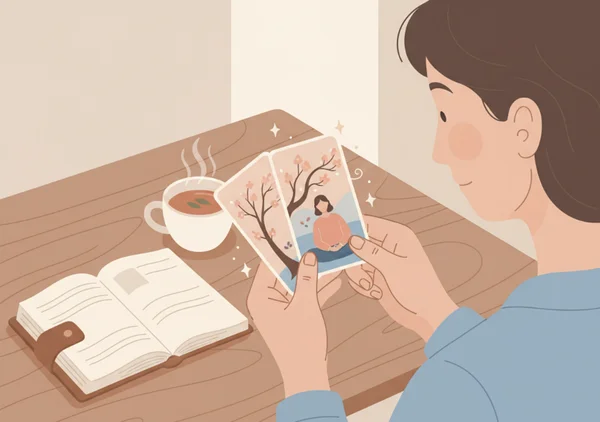
How can a simple set of cards help you navigate the complexities of your emotions? The answer lies in the power of visual storytelling and personal reflection. By using a daily tarot card as a prompt, you can begin to look at your life through a different lens. This practice helps you pause, breathe, and check in with yourself before the day's stress takes over.
This article explores the intersection of psychology and card-based reflection. We will provide actionable techniques to improve your mental health. Whether you are dealing with a stressful career or looking for deeper meaning in your relationships, learning to use these tools can be a game-changer for your self-care routine.
Understanding Tarot as a Mental Wellness Tool
When we think of tarot, we often imagine crystal balls and mysterious predictions. However, in the modern wellness community, these cards are being rediscovered as a psychological mirror. This tool helps people access subconscious thoughts and feelings that might otherwise remain hidden beneath the surface of a busy mind.
Using these cards for mental wellness is about "archetypes"—universal patterns of human experience. Each card represents a common feeling, a challenge, or a growth opportunity that we all face. When you look at an image, your brain naturally tries to find a connection between the art and your life. This is where the healing begins.
The Psychology Behind Tarot for Self-Reflection
The effectiveness of this practice for self-reflection comes from a psychological concept called "projective identification." This works like a Rorschach inkblot test. When you see a card like "The Hermit," you're not just looking at a man with a lantern. Instead, you might recognize your own need for a break from social media or a desire to spend more time alone with your thoughts.
By projecting your inner state onto the deck, you can talk about your problems with more detachment. Instead of saying "I am overwhelmed," you might look at a card and say, "This image represents the heavy burden I am carrying right now." This small shift in language helps reduce the intensity of negative emotions, making them easier to manage.
Furthermore, the deck acts as a "pattern interrupter." Our brains often get stuck in repetitive loops of worry or self-doubt. A random tarot generator introduces a new idea into that loop, forcing your mind to consider a different perspective. This can lead to those "aha!" moments that are so vital for mental clarity.
How Random Tarot Cards Facilitate Emotional Insight
Why is it better to pick a card at random? When we choose what we want to hear, we often fall into the trap of confirmation bias. We look for evidence that supports what we already believe. However, when you use an online tarot tool, the randomness bypasses your ego's defenses.
A random draw might present a theme you’ve been avoiding. For example, if you are stressed about work but keep pulling cards related to "Emotional Balance," it might be a sign that your stress stems from a lack of connection with loved ones rather than just your workload.
This unexpected insight makes the feature incredibly effective. It challenges you to think outside your usual box. By responding to the "surprise" of a random draw, you develop cognitive flexibility. This ability to adapt your thinking to new information is a key trait of resilient mental health.
Practical Techniques for Daily Mental Wellness with Tarot
Incorporating tarot into your life creates a dedicated space for mental wellness. It costs only a few minutes of your time each day. The most successful wellness habits are easy to start. That's why having a structured path helps you stay focused on your emotional goals.
The goal is consistency and intention. By making this practice a small part of your daily rhythm, you create a dedicated space for emotional check-ins. We recommend starting with simple, theme-based readings to keep your routine manageable.
Creating Your One-Card Daily Tarot Practice
The simplest way to begin is with a one card reading each morning. This acts as an "intention setter" for the day ahead. Instead of checking your emails first thing, try this three-minute routine:
- Center Yourself: Take three deep breaths and clear your mind.
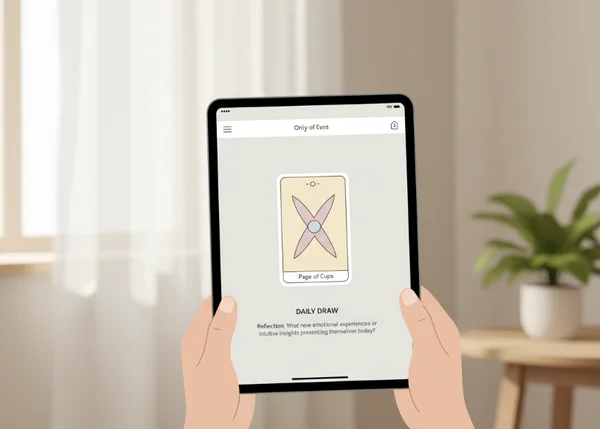
- Draw a Card: Use a free tarot reading tool to get your card for the day.
- Observe: Don't look up the "official" meaning right away. Look at the image. How does it make you feel?
- Reflect: Ask yourself, "How might this energy show up in my life today?"
- Set an Action: If you pull a card about "Rest," make a promise to take a 10-minute walk alone later.
This practice grounds you in the present moment. It transforms the start of your day from a reactive state to a proactive state of self-awareness. Over time, these daily check-ins build a strong foundation of emotional intelligence.
Using Tarot Cards as Emotional Anchors During Stress
In moments of high anxiety, our "logical brain" often shuts down. Visual aids are incredibly helpful for "grounding"—bringing your focus back to the physical world. You can use a specific card as a visual anchor.
If you find an image that represents "Peace" or "Strength" to you, keep it accessible on your phone. When you feel a wave of stress, look at the card and focus on its details: the colors, the shapes, and the symbols. This technique gives your brain a neutral, non-threatening object to focus on. By concentrating on the card, you interrupt the physical symptoms of stress. You can try our tool to find a card that resonates with you as a calming image.
Integrating Tarot into Your Holistic Wellness Routine
To get the most out of this practice, it should not exist in a vacuum. It works best when combined with other proven self-care strategies like journaling and meditation. Think of the cards as the "spark" that starts the fire of self-discovery.
By integrating these practices, you move from simple observation to active growth. You stop just "seeing" your emotions and start "processing" them. This holistic approach ensures that the insights you gain actually lead to positive changes in your behavior and mood.
Combining Tarot with Journaling for Deeper Processing
Journaling is a top recommendation for managing anxiety. When you add cards to the mix, you solve the problem of "blank page syndrome." The card provides the prompt.
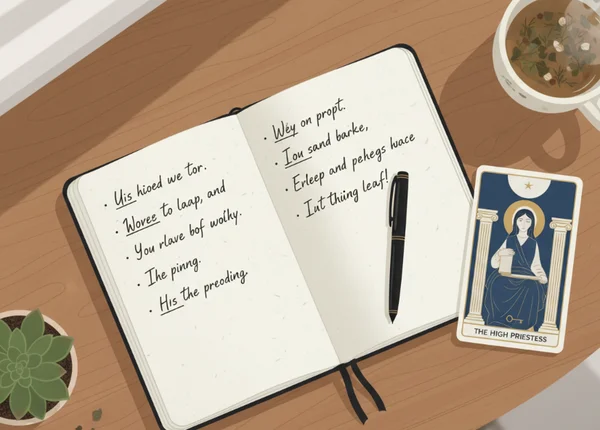
After you draw a card, spend five minutes writing in a notebook. Use these prompts:
- "What is the first emotion I felt when I saw this image?"
- "Does this remind me of a specific situation I am facing right now?"
- "What is one small thing I can do today to honor this message?"
Writing your thoughts down helps externalize them. Once a worry is on paper, it often feels smaller. You can even use the "export to PDF" feature on our tarot card reading page to keep a digital record of your sessions.
Using Seasonal Tarot Themes for Year-Round Growth
Our mental health often follows cycles, much like the seasons. We might feel more energetic in the spring and more introspective in the winter. Checking in with these larger cycles can help you stay balanced throughout the year.
For example, you might perform a more complex tarot card spread at the start of a new month. This allows you to look at "The Big Picture." Instead of focusing on just today's stress, you can look at long-term goals for career, health, and personal relationships. This practice ensures no part of your mental wellness is neglected.
Your Next Steps in Tarot-Informed Mental Wellness
Instead of viewing this practice as mystical fortune-telling, consider it as a mirror for your own inner wisdom. The simple act of drawing a card and reflecting on its message can create moments of clarity in your busy day. It is a gentle, creative way to support your mental health without the pressure of "getting it right."
The real magic happens when you make this a regular habit. With each draw, you're not just getting a card—you're building a deeper connection with yourself, which is what self-care is truly all about. Remember, the cards don't control your future; you do. They are simply tools to help you see the possibilities that are already in front of you.
Frequently Asked Questions
Is tarot effective for anxiety and stress relief?
Yes, many people find these cards helpful for anxiety because they provide a structured way to process overwhelming thoughts. By focusing on a specific image, you can practice mindfulness and grounding. However, it is most effective when used alongside other healthy habits. To start a calming practice, you can try a reading and focus on the visual elements of the cards to quiet your mind.
How often should I use tarot for mental wellness purposes?
There is no strict rule, but many people find that a daily practice offers the most benefit. A morning "one-card pull" is a great way to set an intention, while an evening reading can help you decompress. Using an online tool makes it easy to fit this habit into a busy schedule, as it only takes a minute or two to get a meaningful interpretation.
Can tarot replace professional mental health treatment?
No, this is a tool for self-reflection, but it is not a replacement for professional therapy, counseling, or medical treatment. If you are experiencing severe mental health issues, please consult a licensed professional. These cards can be a wonderful companion to therapy by providing topics for discussion, but they should never be used as a sole diagnostic or treatment tool.