Tarot Rider Guide to the Rider-Waite Deck for Beginners
July 8, 2026 | By Orion Drake
If you searched for tarot rider, you are probably looking for the classic Rider-Waite tarot family: the deck style many beginners meet first, the one whose images shaped thousands of modern tarot books, apps, and meanings pages. It is sometimes called Rider tarot, Rider-Waite tarot, Rider-Waite-Smith tarot, or simply the Rider deck. The names vary, but the beginner question is usually the same: how do you read these cards without turning every symbol into a mystery test? A simple place to begin is an online one-card pull, then use the card as a focused prompt for reflection rather than a fixed prediction.
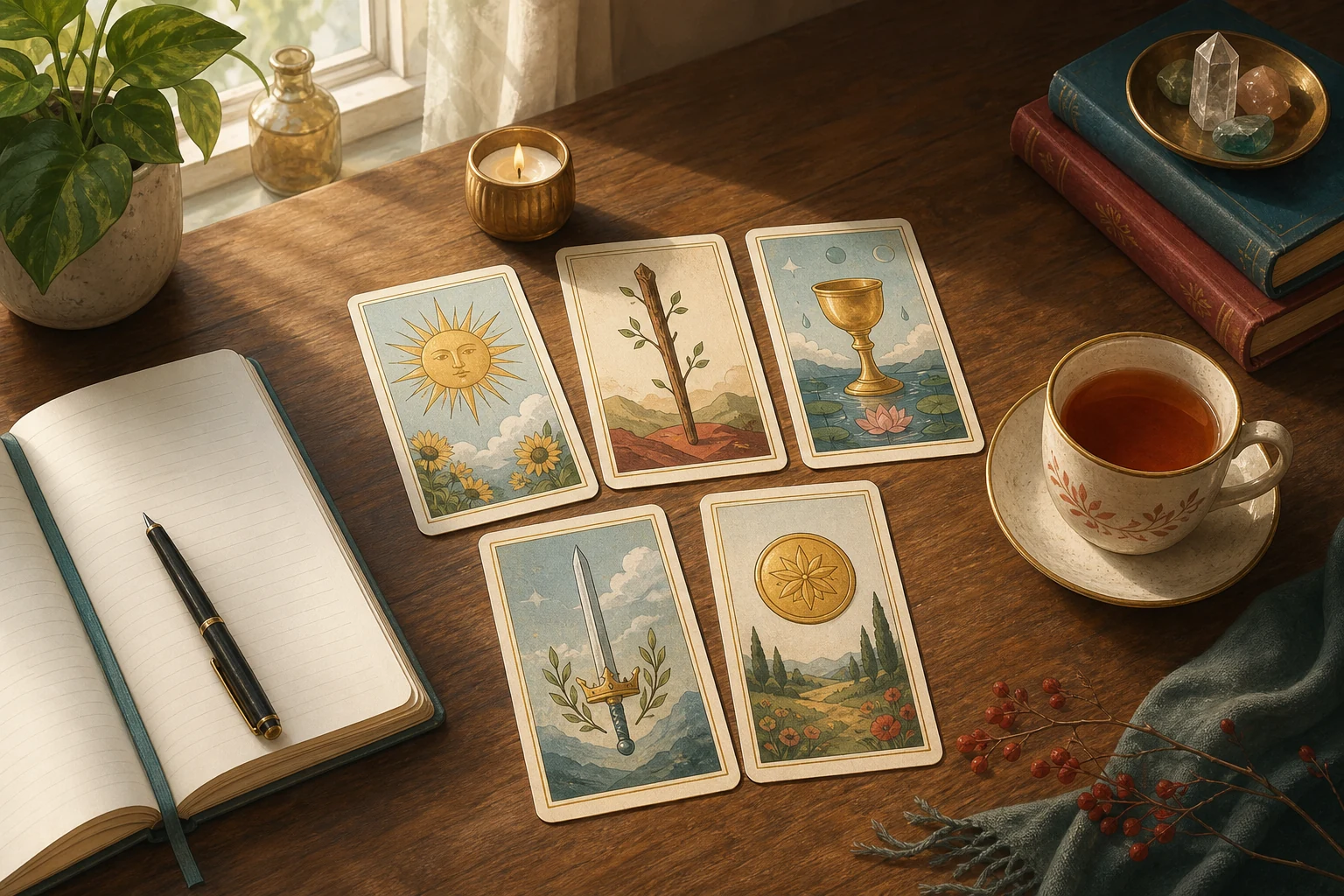
What Is the Rider Tarot?
The Rider tarot is a common shorthand for the Rider-Waite tarot deck, first published in the early twentieth century by the Rider company, with occultist A. E. Waite as the author and Pamela Colman Smith as the artist. Many modern readers add Smith's name and call it the Rider-Waite-Smith deck because her illustrations are the reason the deck became so readable.
The deck follows the standard 78-card tarot structure: 22 Major Arcana cards and 56 Minor Arcana cards. What made the Rider-Waite-Smith system especially influential is that the Minor Arcana are fully illustrated. Instead of showing only a number of swords, cups, wands, or pentacles, the cards show scenes. A beginner can look at the Five of Cups and notice grief, loss, and what remains. They can look at the Eight of Cups and see departure, searching, or emotional distance. The image gives the mind something concrete to explore.
That visual clarity is why so many "Rider Waite Tarot deck meanings" guides, beginner books, and online card lists use this tradition as their base. Even when a modern deck has a different art style, its meanings often echo the Rider-Waite-Smith scenes.
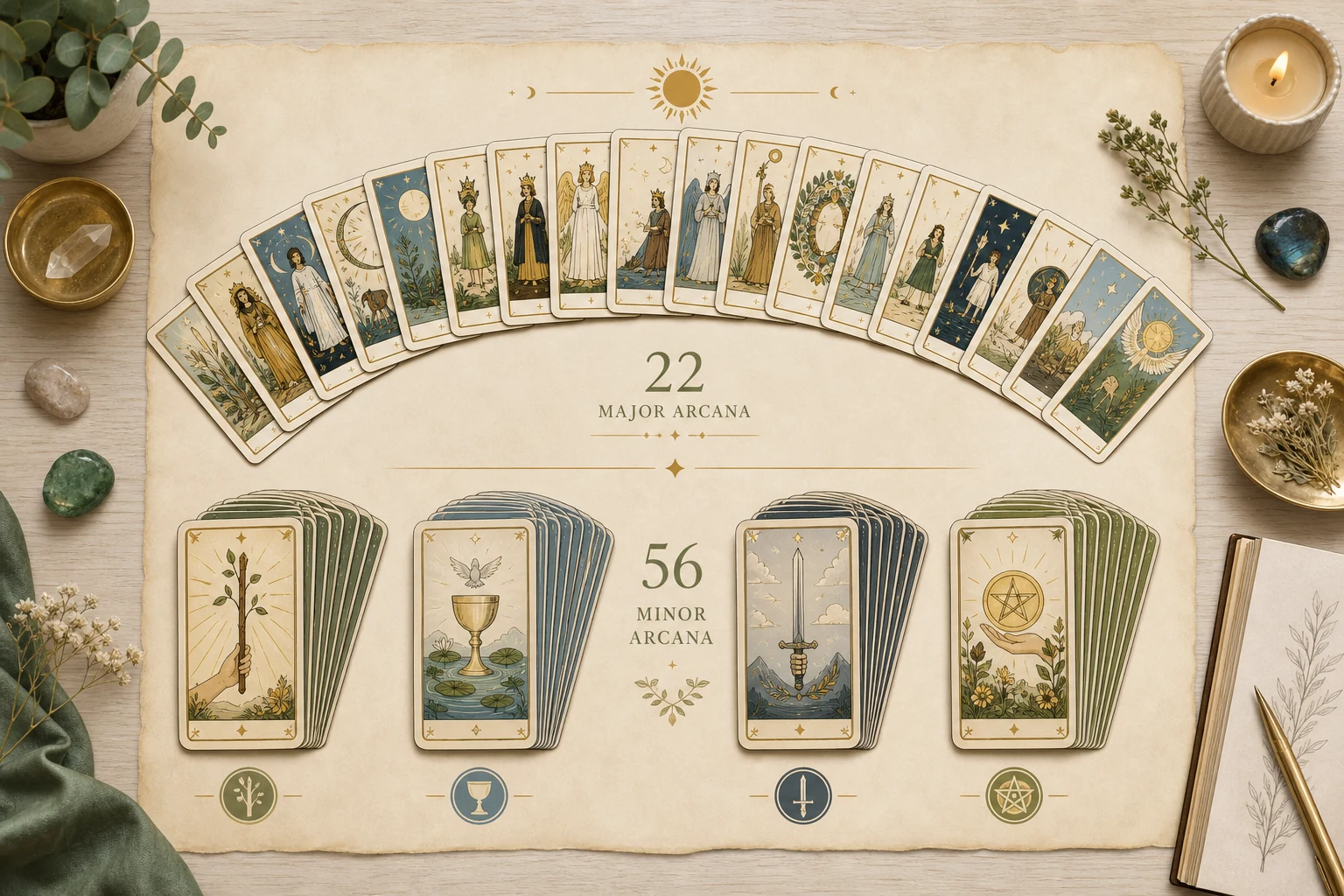
Why the Rider-Waite-Smith Deck Became the Beginner Standard
The tarot rider tradition became a learning standard because it balances symbol, story, and structure. The pictures are rich enough to reward close study, but they are not so abstract that every card requires memorizing a hidden code before you can begin.
For beginners, that matters. A deck can be beautiful and still be hard to learn if the cards do not show clear actions, moods, or relationships. The Rider-Waite-Smith scenes let you ask ordinary questions: Who is standing? Who is leaving? What is being offered? What is blocked? What emotion does the scene suggest before you check a guidebook?
This is also why a simple random tarot card tool works well with Rider-style learning. You do not need to perform a large spread every time. One card can give enough visual material for a short journal entry, a daily theme, or a question such as "What pattern should I notice today?"
The deck also has a shared language. When a book explains the Magician, the Hermit, the Lovers, the Two of Cups, or the Ten of Swords, it often assumes the reader knows the Rider-Waite-Smith image. Learning that visual vocabulary helps you understand many other decks and meanings resources later.
Rider-Waite Tarot Meanings Without Memorizing Every Card
It is tempting to search for a Rider tarot PDF, a guidebook PDF, or a complete "meaning of each card" list and then try to memorize all 78 cards at once. A list can help, but memorization is not the whole skill. Tarot becomes more usable when you combine three layers: image, structure, and question.
Start with the image. Before reading any definition, describe the card in plain language. For example, the Magician stands at a table with tools from the suits around him. You might notice focus, readiness, skill, and the act of bringing an idea into form. You do not have to settle the meaning immediately; just name what the picture is doing.
Then add structure. Major Arcana cards often point to larger life themes, while Minor Arcana cards tend to feel closer to daily situations. Wands often relate to energy and initiative, cups to emotion and connection, swords to thought and conflict, and pentacles to practical matters. These are not rigid boxes, but they give you a map.
Finally, bring in the question. The same card can feel different when the question is about work habits, emotional boundaries, study, creativity, or a daily mood. The tarot rider system is strongest when you treat the card as a conversation starter. Ask: "What is this image asking me to notice?" and "What small, realistic reflection fits my situation?"
How to Do a Simple Rider Tarot Reading Online
A simple Rider-Waite tarot reading online does not need to imitate a formal in-person session. For an informational, reflective reading, keep the process short and repeatable.
- Choose one clear question. Good beginner questions are open-ended: "What should I pay attention to today?" or "What attitude would help me handle this situation more calmly?"
- Draw one card. If you are using a digital tool, treat the random result as a prompt, not an order.
- Observe the image first. Write down three visual details before checking a meaning.
- Match the card to the question. Do not force every traditional meaning into the situation.
- End with one gentle action or reflection. This might be a journal sentence, a boundary to consider, or a theme to watch.
For slightly more context, try a three-card past-present-future style spread. Use it as a story frame rather than a claim about what must happen. The past card can suggest background, the present card can name the current tension, and the future card can point to a possible direction if the same pattern continues.
Rider Tarot Cards, Deck Images, and Guidebooks
Many searches around tarot rider are really about choosing a learning resource: "Rider Waite Tarot deck images," "Rider Waite Tarot book," "Rider Waite Tarot deck for beginners," or "Rider Waite Tarot guidebook PDF." The best resource depends on what you need.
If you are learning meanings, a guidebook with concise upright and reversed notes can be useful, but it should not replace looking at the card. If you are comparing decks, pay attention to whether the art follows the original Rider-Waite-Smith scenes closely or uses a modern reinterpretation. A deck can be faithful in structure while changing color, line style, symbolism, or cultural framing.
If you are using online images, be mindful that not every page presents the same edition, color treatment, or card order. "Original" can mean different things in product descriptions: original structure, original publisher lineage, a facsimile style, or a familiar image tradition. For learning, consistency matters more than chasing every version. Pick one visual system, read with it for a while, and let pattern recognition build.
For PDF searches, use caution. A free file is not automatically authorized or useful. Instead of collecting many files, build a small study routine: card image, short meaning, personal note, and one example from daily life. That routine teaches faster than downloading another long list.
Common Beginner Mistakes With Tarot Rider Meanings
The first mistake is treating every card as either good or bad. Rider-Waite-Smith images can be dramatic, especially cards like Death, the Tower, the Devil, or the Ten of Swords. In reflective reading, dramatic does not always mean disastrous. Death may point to change, the Tower to disruption of a weak structure, and the Ten of Swords to exhaustion or an ending that needs honest naming.
The second mistake is reading too literally. The Lovers is not only romance. The Hermit is not only loneliness. The Emperor is not only authority. Each card has a central image, but context shapes the useful meaning.
The third mistake is asking the cards to make decisions that belong to you or to qualified support. Tarot can help you slow down and notice a pattern, but it should not replace medical, legal, financial, or safety guidance. When a situation has real-world consequences, use tarot as a reflection tool alongside practical information and appropriate help.
The fourth mistake is skipping your own observation. If every reading begins and ends with someone else's keyword list, you may learn definitions but miss the visual language. Spend a minute with the card before looking anything up. That habit makes the Rider-Waite-Smith system feel less like a test and more like a set of images you can actually work with.
Use Tarot Rider as a Daily Reflection Practice
The most sustainable way to learn tarot rider meanings is not to master all 78 cards in one weekend. It is to meet the cards repeatedly in small, low-pressure moments. A daily pull, a weekly three-card spread, or a short journal note can make the deck familiar without making it heavy.
Try this simple rhythm: draw a card, name the first visual detail you notice, write one sentence about how it connects to your day, then check a meaning only after you have formed your own first impression. If you want a quick digital starting point, a gentle daily pull can support the habit without needing a physical deck nearby.
Over time, the Rider-Waite-Smith deck becomes less about memorizing a finished dictionary and more about building a personal relationship with a shared symbolic language. The cards do not need to tell you what will happen. They can help you pause, choose a better question, and notice what your attention keeps returning to.
FAQ
What is the rider tarot?
Rider tarot usually refers to the Rider-Waite tarot deck, also called the Rider-Waite-Smith deck. It is a 78-card tarot deck known for fully illustrated scenes, especially in the Minor Arcana. Many beginner guides and modern decks use it as a foundation.
Is tarot rider the same as Rider-Waite tarot?
In most searches, yes. "Tarot rider," "rider tarot," "Rider-Waite tarot," and "Rider-Waite-Smith tarot" often point to the same deck tradition. The Rider name comes from the original publisher, while Smith recognizes Pamela Colman Smith's artwork.
What does the Magician mean in Rider-Waite tarot?
The Magician often points to focus, skill, intention, and the ability to bring available tools together. In a reflective reading, it can ask where you have more agency than you think, or where an idea needs practical action.
What is Pamela Colman Smith's religion?
Pamela Colman Smith's life is often discussed through several influences, including her artistic work, Christian cultural background, and involvement in occult circles of her era. For tarot study, her lasting importance is the visual language she created for the deck.
Why do some people say God forbids tarot?
Some religious traditions discourage tarot because they associate it with divination or spiritual practices outside their faith boundaries. Views differ widely. If tarot conflicts with your beliefs, it is reasonable to avoid it. Others use tarot only as a reflective or creative prompt.
Is the Rider-Waite deck good for beginners?
Yes, it is one of the most common beginner decks because the scenes are clear, widely referenced, and supported by many guidebooks. A beginner can study the pictures, learn the suit structure, and compare their observations with traditional meanings.
Do I need a Rider tarot PDF to learn the cards?
No. A PDF or guidebook can be helpful, but it is not required. You can learn by studying one card at a time, writing your own observations, and checking concise meanings after you have looked carefully at the image.