Yes/No Tarot Readings: Simple Random Card Guide
December 25, 2025 | By Orion Drake
Life is full of questions. Some are big and complex, while others just need a clear, simple answer. Should you take that new job? Is this relationship right for you? When you're at a crossroads and need quick guidance, the detailed interpretations of a full tarot spread can sometimes feel overwhelming. You just want a straightforward "yes" or "no."
This is where the power of a single, random card comes in. A yes/no tarot reading simplifies the process, offering a direct reflection of the energy surrounding your question. It cuts through the noise and provides the clarity you need to move forward with confidence. At Random Tarot Card, we've designed an intuitive tool to help you get these answers instantly. This guide will show you exactly how to use a random card draw for effective yes/no readings.
What Makes Tarot Perfect for Yes/No Questions?
While tarot is known for its rich symbolism and nuanced stories, its core structure is also ideal for providing binary answers. The cards don't predict a fixed future; instead, they act as a mirror to your current situation and the energies at play. This makes them a powerful tool for quick decision-making.
By drawing a single card, you invite the universe to give you focused advice. This method removes personal bias and overthinking, allowing you to connect with your intuition in a simple yet profound way. It’s a practice that has deeper roots than you might think.
The Historical Roots of Binary Divination
For centuries, people have sought yes-or-no answers from various forms of divination. From flipping a coin to casting lots, the desire for a clear signal is a fundamental human experience. Tarot, with its system of positive, negative, and neutral archetypes, fits naturally into this tradition of seeking simple, direct guidance. Early forms of cartomancy, the art of reading cards, often focused on these kinds of straightforward answers for everyday questions about fortune, love, and choices.
Each card in the deck carries a core energy. Cards like The Sun radiate positivity and forward momentum, clearly signaling a "yes." Meanwhile, cards like the Ten of Swords represent endings or challenges, pointing toward a "no." This inherent polarity is what makes tarot an excellent tool for binary questions, providing guidance that is both ancient and immediately relevant.
How Random Cards Provide Unbiased Guidance
When you're deeply invested in a question, it's easy for your hopes and fears to influence a reading. You might subconsciously pick a card you want to see. A random card generator eliminates this problem entirely, ensuring the guidance you receive is truly unbiased.
Using a tool for a random tarot draw ensures that the card you receive is not influenced by your own state of mind. It’s a pure reflection of the universe's response to your query. This randomness is key to trusting the process and receiving guidance that is objective, clear, and focused solely on the energy of your question.
Your 3-Step Framework for Simple Yes/No Readings
Getting a clear yes/no answer from tarot doesn't have to be complicated. By following a simple, structured approach, you can gain valuable insight in just a few moments. This three-step framework is designed to help you get the most out of your reading, turning a single card into powerful, actionable guidance.
Ready to find your answer? Let’s walk through the process.
Step 1: Formulating Your Yes/No Question
The clarity of your answer depends on the clarity of your question. Before you draw a card, take a moment to formulate a question that can be answered with a simple "yes" or "no." Avoid open-ended questions like "What will my career be like?"
Instead, focus on specific, direct queries. Here are some examples:
- "Is this the right time to start my own business?"
- "Should I pursue this new relationship?"
- "Will moving to a new city be beneficial for me right now?"
A well-framed question sets the stage for a clear and helpful response. Keep it simple, focused, and centered on a single decision.
Step 2: Drawing and Interpreting Your Random Card
Once your question is clear in your mind, it's time to draw your card. This is the moment where you connect with the energy of the tarot. Close your eyes, take a deep breath, and focus on your question as you prepare to receive your answer.
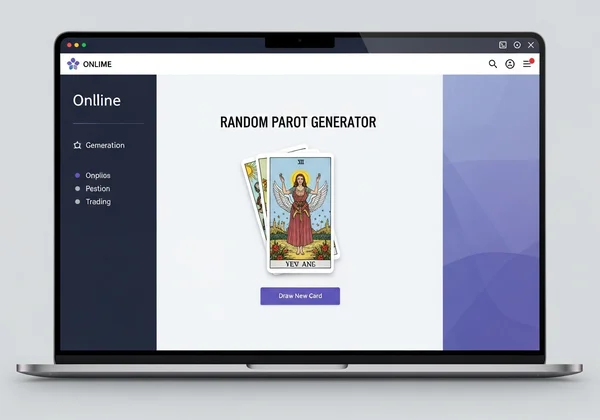
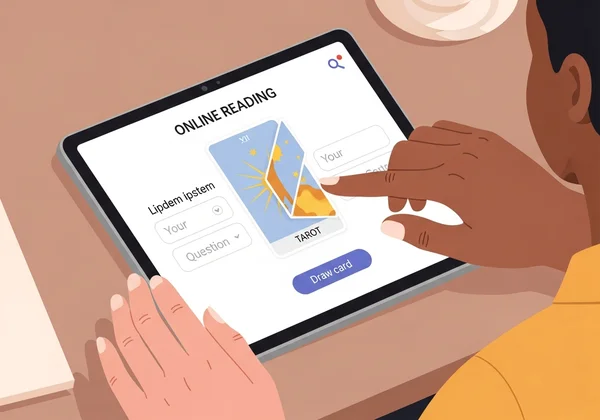
When you're ready, use an online tool to pull a random card. The card that appears is the universe's direct response to your query. Pay attention to your initial feeling when you see the card. Does it feel positive, challenging, or neutral? This intuitive hit is often the most important part of the interpretation.
Step 3: Turning Card Meaning into Binary Guidance
Now, it's time to translate the card's meaning into a "yes," "no," or "maybe." While some cards are very direct, others require a little more thought. As a general rule, cards with positive, active, and forward-moving energy suggest a "Yes." Cards that represent challenges, delays, or endings often mean "No."
Neutral cards suggest that the answer is not yet determined or that you need more information. They invite you to look at the situation from a different perspective. Don't worry if it seems confusing at first; the next section provides a handy list to get you started.
Common Tarot Cards and Their Yes/No Meanings
To help you get started with your yes/no readings, here is a quick guide to how different cards can be interpreted. Remember, these are general guidelines. Your own intuition is always your most important tool.
This list is not exhaustive, but it covers some of the most common cards you might pull and what they typically signify in the context of a yes/no question.
Cards That Typically Indicate "Yes"
These cards are filled with positive energy, momentum, and success. Drawing one of these is a strong sign that the path is clear and the universe is supporting your decision.
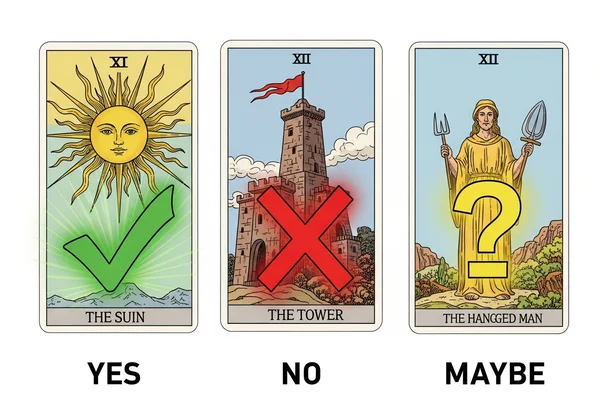
- The Sun: The ultimate "yes" card. It represents joy, success, and clarity.
- The Star: A sign of hope, inspiration, and divine guidance. A definite "yes."
- The World: Signifies completion, achievement, and fulfillment. A strong "yes."
- Ace of Wands: Represents new beginnings, energy, and potential. A green light to move forward.
- Six of Wands: A card of victory, public recognition, and success.
- Page of Cups: This card often points to a "yes" related to new creative ideas, emotional messages, or opportunities that bring joy.
Cards That Typically Indicate "No"
These cards often point to obstacles, delays, endings, or a need for caution. They are not necessarily "bad," but they advise against moving forward at this time.
- The Tower: Represents sudden upheaval and destruction. A very strong "no."
- Ten of Swords: Signifies a painful ending, betrayal, or rock bottom. A clear "no."
- Five of Cups: Points to regret, loss, and disappointment. The answer is likely "no."
- Nine of Swords: A card of anxiety, fear, and worry. It suggests this path will bring more stress.
- Three of Swords: Represents heartbreak, sorrow, and painful truth. A direct "no."
- Five of Pentacles: This card signals financial hardship, isolation, and feeling left out. It's a clear "no," especially for questions about material security.
Neutral Cards That Require Context
Some cards don't give a simple "yes" or "no." They ask you to pause, reflect, and consider the situation more deeply. The answer might be "maybe," or it might depend on other factors.
- The High Priestess: This card encourages you to trust your intuition. The answer is within you, not external.
- The Hanged Man: A sign to pause and look at things from a different perspective. The answer is not "no," but "not yet."
- Two of Swords: Represents a stalemate or indecision. The card is telling you that you don't have enough information to decide.
- Justice: This card suggests the outcome will be fair and balanced, but it depends entirely on past actions. The answer is conditional.
- Temperance: This card calls for patience, balance, and moderation. A "yes" is possible, but it will require time and careful blending of different factors. Avoid rushing.
Your Journey to Clearer Decisions Starts Here
Navigating life's decisions can be challenging, but you don't have to do it alone. A simple yes/no tarot reading offers a powerful way to tap into your intuition and receive clear, unbiased guidance when you need it most. By framing a direct question and drawing a single random card, you can cut through confusion and find the confidence to take your next step.
As you move forward, remember:
- Frame a clear question: Specific yes/no questions yield the most helpful answers.
- Trust the random draw: It provides unbiased guidance free from your own hopes and fears.
- Use card meanings as a guide: Positive cards often mean "yes," challenging cards mean "no," and neutral cards invite deeper reflection.
The best way to understand the power of this method is to experience it for yourself. Are you ready to get an answer to that burning question on your mind?
Your journey to clarity is just one click away. Try a free reading on our site now and discover what the universe wants you to know today.
FAQ Section
Can tarot really give yes or no answers accurately?
Tarot provides guidance, not absolute predictions. When used for yes/no questions, it reflects the current energy surrounding your situation. A "yes" card indicates that the energy is favorable for a positive outcome, while a "no" card suggests obstacles. It's a tool for insight, helping you make a more informed decision rather than dictating your future.
How often should I do yes/no tarot readings?
It's best to avoid asking the same question repeatedly in a short period. This can lead to confusion and shows a lack of trust in the initial guidance. Use yes/no readings for specific decisions as they arise. For daily inspiration, a general one-card pull is a wonderful practice. If you feel compelled to ask constantly, it may be a sign to step back and reflect on why you are seeking so much external validation.
What if my random card meaning doesn't clearly indicate yes or no?
If you pull a neutral card like The High Priestess or the Two of Swords, the tarot is sending you a message. It's telling you that the answer isn't a simple yes or no right now. This is a sign to pause, gather more information, or look within for the answer. Instead of getting frustrated, see it as an invitation to explore the situation with more depth before making a move. You can always draw another card later when the situation has evolved.